Showing posts with label rock epic of the month. Show all posts

31 August 2009

Rock epic of the month: "Gods of War" (Def Leppard) 1987


Rock epics of the month is a series of posts where I'll look back on classic examples of what I think is the greatest excess of rock and roll - the rock epic.

This month, I'm going cock rock again. Sorry.

Every now and then, music reaches a production high point that just makes you breathe out a sigh and go, "Damn!".

We saw it in the sixties with Sgt. Pepper's, in the seventies with The Dark Side of the Moon and in the nineties with Ministry's Psalm 69 and Massive Attack's Blue Lines.

In the eighties, these production high points happened in cock rock land with two acts and two producers - Bruce Fairbairn with Aerosmith on Permanent Vacation and Pump, and Robert John "Mutt" Lange with Def Leppard on Pyromania and Hysteria.

And it's with Def Leppard that we go to for this one.

They'd released their breakthrough release in the US with the well received Pyromania in 1983 and chose wisely when following this up to work with Lange again. Hysteria sold twice as many copies as Pyromania - being 20 million. That is positively enormous.

I was prompted to write about this one, when a friend of mine talked about the impact that Def Leppard had on her. I must admit to being somewhat ambivalent to the impact of cock rock, generally, but I thought I'd go online and have a listen to this album (and Pyromania) in full again to get an idea of what it was all about back then.

Hysteria is everything a cock rock lover loves. Big riffs. Big high screaming vocals. Guitar solos all over the shop. And enormous hair all round, usually mulleted.

Naturally, I'm still not convinced about the worth of this genre in the pantheon of rock and roll, but I can respect the place that Hysteria, and for that matter, Pyromania holds within the affront that cock rock presents to good taste and indeed, to rock and roll itself. After all, can we not also celebrate rock and roll's missteps as well as the high-points within those missteps?

Anyway, it's a wonder that Def Leppard were able to get this album out at all. Drummer Rick Allen was involved in a car crash prior to recording this and as a result, became rock's most celebrated one-armed drummer. Lange had to be talked into producing this after the band had flirted with the idea of Jim Steinman or producing it themselves.

It does speak some amazing volumes of the loyalty of the band members: Most bands would have parted ways with Allen, but they encouraged him to soldier on, developing a modified drumkit enabling him to play with a lot of foot pedals and one drumstick in hand.

On Pyromania, Phil Collen had been brought in on guitar to replace Pete Willis who had been fired for alcoholism. But things were not well with the other guitarist Steve Clark, who was slowly dying of the exact same thing. As a result of Clark's unreliability, Lange chose to get Collen to do quite a lot of the solo work. This supposedly caused a rift in the band, although I suspect that it was between Clark and the rest of the band.

So on to "Gods of War" which occupied six minutes and 37 seconds. This is actually surprisingly good, although the first and second refrains are somewhat iffy ("On a countdown to zero..." and "Here it comes...") because they require a key change which does, while I'll admit sets up the chorus quite nicely, appears slightly out of kilter with the rest of the song.

The song starts off with a fairly simple, yet iconic bassline from bassplayer, Rick Savage. Clark starts playing the intro riff for a couple of bars, then it's all on from there. The chorus is killer with some awesome cock rock screaming from vocalist Joe Elliott, but the tune really kicks into an open goal just before the end when the last minute kicks in, with some nice guitar riffing, subdued soloing and sound-bites of Ronald Reagan and Margaret Thatcher that indicate that, whatever else, they loved a good military dust-up.

The proper video features bits from Top Gun. Quite ironic when you consider that this is quite an anti-war song, and that Top Gun was such over-the-top, flag-waving, pro-American propaganda.

Anyway enjoy this live video. It should take you back to the days when rock concerts only happened in stadiums and realises that this tune was a fully worked live proposition. Enjoy:


30 June 2009

Rock epic of the month: "Let There Be Rock" (AC/DC) 1977


Rock epics of the month is a series of posts where I'll look back on classic examples of what I think is the greatest excess of rock and roll - the rock epic.

I have tickets to see AC/DC next year. Yes folks, I will be one of those black-clad bogans seeing these guys live.

And I guarantee you this: I too will be perpetrating the following atrocities in the name of rock:

  • Punching my fist in the air;
  • Goat’s head salutes;
  • Air guitaring; and
  • Headbanging

And maybe some slamming as well, although AC/DC have never really been a band that you can slam to.

OK. So to celebrate, I’m doing ‘Let There Be Rock’ this month.

Acca Dacca were never really a band that did anything other than meat and potatoes rock and/or roll. I can find very few bona fide rock epics in their vast back catalogue so it’s either this or ‘Night Prowler’. So I thought I’d go for the screaming obvious and do this one.

Let There Be Rock’ clocks in at 6:06. And you know, the album that it’s off (Let There Be Rock, of course) correctly shows a band hitting some sort of creative stride. In the case of this tune, however, the tune just takes off like a racing car and keeps going like it’s completely out of control.

Phil Rudd’s drums sound like a gorilla is pounding on them and lead vocalist, the late Bon Scott just sounds like he’s totally mental as he tells the tale of how ROCK!! came into being. But while Angus Young might be the face of AC/DC, here the focus is on the rock solid riffing of Malcolm Young on rhythm guitar and bassist Mark Evans.

If there was any doubt (surely not) prior to this album that Malcolm Young is the engine room of this band, then this album, and this song in particular, put all speculation to rest.

The fact of the matter is this: AC/DC simply would not work without the riffs of Malcolm Young. You can remove Angus, because he’s essentially visual: The thing that everyone remembers about AC/DC songs if you're listening to them at home is the monolithic riffs of Malcolm. Even if some feel that they’re a bit samey.

Incidentally, have you ever seen people criticise AC/DC for this, and then it turns out that they’re fans of another “samey” act such as The Cure or The Church? I have. But this is their thing, their schtick. Their particular aural signature, if you like.

Malcolm Young’s riffs are iconic. End of story. They’re so iconic that The Cult had some sort of accident in the eighties and recorded an entire album where they thought they were AC/DC – Electric.

But don’t let me tell you. Check out
this video of the song in question. Bon Scott as the preacher man looks absolutely certifiable. Angus is dressed as a choirboy or something with a cardboard halo:


Let there be rock!

30 April 2009

Rock epic of the month: "Dry The Rain" (The Beta Band) 1997


Rock epics of the month is a series of posts where I'll look back on classic examples of what I think is the greatest excess of rock and roll - the rock epic.

I wasn't about to let another month go by without doing one of these, but I thought I'd open with some correspondence that I got from a regular reader a little while back. In it, he complained that that I've never made it clear what a 'rock epic' is.

Actually, I did, way back in the first one in this series, however I will re-state it:

There are no hard and fast rules for what a rock epic actually is, but the general agreement is that it needs to go for more than 6 minutes and has long bits where there are no vocals.

Another complaint is that when I lead into the song itself, I seem to end abruptly. I can only attribute this to the fact that I normally try to embed a YouTube video of the tune in question at the end of each post.

Naturally, the YouTube vid doesn't make it into the RSS feed or my emails, if you get my posts in your inbox. So you'll have to click on the post heading if you want to hear the tune.

With that out of the way, please allow me to roll on to this month's rock epic, which is "Dry The Rain" by The Beta Band. A Scottish band from St Andrews who formed in 1996, they were the pioneers and to my knowledge the sole proponents of a genre known as "folk-hop". Obviously, that's a blend of folk and hip-hop.

I never understood the Beta Band until after they had broken up, but this tune, man it pushes all the right buttons. Six minutes and five seconds of blissful mellowness.

This was on their Champion Versions EP, which was the first recording that they released. Later on, it would be bundled in with the The Patty Patty Sound and Los Amigos del Beta Bandidos EPs to form their The Three EPs compilation in 1998.

The thing that made this song is that scene from High Fidelity. Barry, played by Jack Black has been having a great time blasting "Walking on Sunshine" by Katrina and the Waves in a record store owned by Rob Gordon. Gordon (John Cusack) goes mental and takes it off. Not long after this, he says to Dick (Todd Louiso), "I will now sell 5 copies of The Three EPs by The Beta Band,"and rips into this tune at about the 3:40 mark.

But this ignores the build up. The intro and verses of this tune are reasonably mellow and jangly. After the second chorus the thing just builds and builds and builds until the certifiable money shot of the tune at 4:06 or thereabouts. The vocals come back in for the outro ("If there's something inside that you wanna say...") while a trumpet and a flugel horn wail away over the top.

Man I love that bit.

Anyway, here it is from YouTube. Enjoy the bejesus out of it folks, because it is quite frankly immensely powerful for what essentially a jangly little tune.


18 November 2008

Rock epic of the month: "Gravity Grave" (The Verve) 1992


Rock epics of the month is a series of posts where I'll look back on classic examples of what I think is the greatest excess of rock and roll - the rock epic.

Shoegazing. What a genre. And it appears to be back, under a term that I have come to deeply despise, "Nu-gaze".

Shoegazing got its name from a variety of bands from London and the Thames Valley who were known for plugging in, switching on, turning the amps up to eleven and playing their guitars through three or four hundred different effects pedals. The act of "shoegazing" itself seems to reference the inordinate amount of time that guitarists in these bands spent looking at the floor, no doubt more interested in their setups than interacting with audiences.

The acts that people seem to remember from this period were the louder bands, My Bloody Valentine, Ride and Swervedriver, however there were three distinct versions of shoegazing for which these bands really only formed the first, louder version.

(Never mind that Swervedriver really were more rock than shoegazing, anyway)

Version two was a poppier, upbeat sound characterised by early Blur, The Charlatans and the Boo Radleys. Blur would probably go on to reap the greatest success of these acts, however, it is interesting to note that really, only the Charlatans managed to last the distance.

And then there was version three. A druggy, slowed down sound that was best characterised by acts such as Slowdive, Chapterhouse and finally, in the last days of the movement, The Verve.

Simply "Verve" initially, The Verve would be forced to add the "The" to the start of their name when poncy wanker jazz label, Verve Records threatened them with legal action over the use of their name.

The Verve were still their original line-up here - vocalist Richard Ashcroft, guitarist Nick McCabe, bassplayer Simon Jones and drummer Pete Salisbury. "Gravity Grave" itself originally surfaced on their EP of the same name which was issued in October 1992. This blogger notices that Gravity Grave seems to have now become the title of a single from the Verve EP, even though that EP was issued in December of that year and contains horrible edits of both "Gravity Grave" and "She's a Superstar".

By the time that The Verve got around to issuing their initial recordings, shoegazing was on death row. The first of the new wave of Britpop was coming through, heralded by the likes of Pulp, Suede and Blur, who had long hated being lumped in with the shoegazing crowd and were well on their way to recording a single-finger salute to the scene in their second album, Modern Life is Rubbish.

Meanwhile, Ride were languishing, My Bloody Valentine had broken up, Swervedriver were looking to replace their rhythm section, and the rest of the shoegazing scene seemed to be in total disarray.

Enter The Verve, who really were quite unlike anything else that the scene had thrown up, up until this point. For starters, they were from Wigan. The Verve entered to a rapturous response from critics and other bands alike, which, in the British music scene, is normally considered a kiss of death. And it kinda was, eventually.

But anyway, on to "Gravity Grave". The Gravity Grave EP (their third release after two well-received singles) contained the full length version of this tune, which at 8:21 is a gobsmackingly beautiful piece of spaced-out meandering. Kicking off with an echoey bass groove courtesy of Jones, "Gravity Grave" quickly establishes where its going as McCabe lets rip on the guitar with some squalls of feedback and some quite loud harmonics all the way through.

Ashcroft's vocals are soft and understated all the way through, although he never ever really went berzerk except in a few places. And there's this vague sound like a harmonica all the way through, which is so far back in the mix, I'm not even sure if it actually even is that.

And to get an idea of the difference between The Verve and some of their peers, compare Salisbury's restrained sticks work to that of Loz Colbert (ex-Ride, now with The Jesus and Mary Chain) and Adi Vines and Jez Hindmarsh (both of various incarnations of Swervedriver) whose approaches seemed to be to beat the living snot out of their drumkits. Salisbury's light patter on the toms is quite a bit different.

The Verve went on to release one album in this sound (A Storm in Heaven) before reluctantly embracing the Britpop wave that had engulfed the UK by that point with their second and third albums, A Northern Soul and Urban Hymns, recorded with the addition of Simon Tong on additional guitar and keyboards.

They then broke up in 1999 before reforming in 2007, without Tong who had gone off to do a stack of work elsewhere, mainly with various projects of Damon Albarn's.

But here's some of "Gravity Grave". It's only four minutes of it, but it's really only had the last part slashed off it. Please sit back and enjoy.

14 October 2008

Rock epic of the month: "Glósóli" (Sigur Rós) 2005


Rock epics of the month is a series of posts where I'll look back on classic examples of what I think is the greatest excess of rock and roll - the rock epic.

This month, I'm really stretching the bounds of what can be considered "rock".

Sigur Rós burst out of Iceland in the mid-nineties, and some said at the time that they probably would have been long forgotten if it wasn't for a fascination with Icelandic culture that was brought to the world's attention via the work of former Sugarcubes frontwoman Björk Guðmundsdóttir, an Icelandic singer who probably would be better described as a performance artist. Or even a complete nutcase.

But where Guðmundsdóttir mined a genre all her own, Sigur Rós were probably better described as riding the wave of a peculiar genre known as post-rock.

Post-rock really was lazy journalist-speak for "How the frig do we categorise this?" It included acts like Tortoise, Mogwai and Don Caballero, and has since been used in arrears to describe some of the work by bands such as Public Image Ltd and the later work of Talk Talk.

Things that post-rock bands seem to have in common is a complete disregard for structure, as well as using their instruments in different ways to provide textures that would otherwise not make an appearance in rock music.

Sigur Rós started in Reykjavic and were named after Sigurrós, the sister of singer and guitarist Jón Þór "Jónsi" Birgisson. Completing the band were Georg "Goggi" Hólm on bass and Ágúst Ævar Gunnarsson on drums.

(Fair dinkum, there's a reason why keyboards in the anglosphere don't have accented letters, not to mention Þ (thorn), ð (eth) and Æ (ash). It's because these letters were replaced in old English by different combinations of letters that do the same thing. I am getting so tired of typing these, but I'll struggle on.)

Anyway, not long after their first album, Von, Birgisson, Hólm and Gunnarsson were joined by Kjartan "Kjarri" Sveinsson on keyboards. They soon released Ágætis Byrjun, an album that introduced the world to Birgisson's penchant for playing his guitar with a cello bow.

Gunnarsson left the band soon after to be replaced by Orri Páll Dýrason who joined the band to lend his skills to the outrageously, pretentiously titled ( ). ( ) featured eight untitled tracks guaranteed to send you barmy, and introduced Birgisson's new fascination with singing gibberish which he called, "Hopelandic".

Their previous groundwork could be described as parts that were either truly "cutting edge" or straightforward wank. In 2005, Birgisson, Hólm, Gunnarsson and Sveinsson lay down tracks in the studio for the album where their experiments with sonic textures finally coalesced into something that, while still pretentious, hit the mark musically. That album was called Takk... and was, just like its predecessors, extraordinarily well received by the critics.

Unlike Takk...'s predecessors, though, you got the distinct impression that this time, the effusive praise from the critics was a bit more sincere, rather than, "Oh shit, I better give this one top marks, because I don't know what the hell is going on and I'll look like a philistine if I don't."

The towering "Glósóli" (6:15) was the apotheosis of this album. Featuring a nice rhythmic groove, courtesy of Hólm and Dýrason, this just moseys on down with rather lovely keyboard cascades from Sveinsson.

Over the top, but nicely buried in the mix, is Birgisson's completely weird-arse falsetto, which almost certainly relegates Guðmundsdóttir's to the top of the "normal" heap.

And it builds. Oh my sweet FSM, how it builds.

By the time that this tune finally unleashes a full-blown scary monster, Birgisson has put his voice away and is blasting out klaxons on his guitar, turning all atmospheric on us at just about the right time.

Oh, and the video is absolutely perfect too.

Be blown away by this. It is frightfully good stuff.


16 September 2008

Rock epic of the month: "Lost Keys (Blame Hofmann)/Rosetta Stoned" (Tool) 2006


Rock epics of the month is a series of posts where I'll look back on classic examples of what I think is the greatest excess of rock and roll - the rock epic.

Get a few blokes drunk at a party, and inevitably the conversation will veer over to who is the greatest rock drummer going at the moment. I know this bloke who will maintain until his dying day that John Stanier (Helmet, The Mark Of Cain, Tomahawk, Battles) is "the hardest working drummer in rock and roll".

For me though, there really is only one choice: Danny Carey.

There is something truly amazing about this guy's precision. And unlike Stanier, the guy can swing a bit, too. Not swing, as in the genre, although I don't doubt for a moment that given half a go, he'd probably be able to have a crack at Gene Krupa's wildest work, but swing, as in fall off the beat and back on again in the blink of an eye.

Kinda like what a good jazz drummer is said to be able to do.

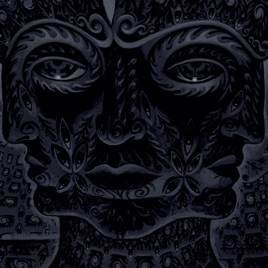
10,000 Days was Tool's fourth album, and in one of my rare album reviews, I wrote about being awestruck by not only Carey's stickswork, but by how well him and bassplayer Justin Chancellor work as a team. Tool's sound is very much built from the ground up, and you could probably release an album with just Carey and Chancellor on it - guitarist Adam Jones and vocalist Maynard James Keenan effectively become the flesh around Carey and Chancellor's bones.

I also wrote about being seriously blown away by this tune: I rightly described it as the "piece de resistance" of the whole CD.

Well, a year and several months later, and I'm no less over it. At 14:55, it's still an almighty bitch-slap of a tune, and anyone who says otherwise either hasn't got it, or hasn't listened the whole way through.

It's listed as two separate tunes on the CD, but they're really rammed together as one. "Lost Keys" starts with some eerie air raid guitar and a plaintive lament on Jones' guitar. Meanwhile, after about two and a half minutes, there's some trouble in ER:

Nurse: Excuse me Doctor? If you have a moment?

Doctor: A moment? What's the question?

Nurse: More of a situation. A gentleman in exam 3.

Doctor: What's the problem?

Nurse: That is the problem. We're not sure.

Doctor: Do you have the chart?

Nurse: Right here.

Doctor: Not much here, is there?

Nurse: No doctor. No obvious physical trauma. Vitals are stable.

Doctor: Name?

Nurse: No sir.

Doctor: Did someone drop him off? Maybe we can speak to them. Let's get some background on this fellow.

Nurse: No ID. Nothing. And he won't speak to anyone.

Doctor: Well then. Let's say hello.

Doctor, to patient: Good morning, I'm Doctor Watson. How are you today?

No response

Doctor, to patient: How are you today?

No response

Doctor, to patient: Look son. You're in a safe place. We wanna help you in whatever way we can. But you need to talk to us, we can't help you otherwise. Now, what's happened? Tell me everything.


Which is where it segues into "Rosetta Stoned". And this is where the fun begins to truly heat up.

We now return you to the action in Act 2. The video is just fantastic, just like all Tool's videos. (My apologies about the last minute of the tune or so being cut off)

Edit 16/09/2008: As regular commenter Taj points out, this is not an official Tool video. Not surprising really - who would normally film a video to a fifteen minute rock epic? It's still good:


15 August 2008

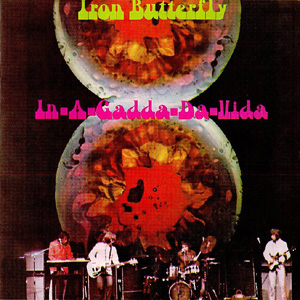
Rock epic of the month: "In-A-Gadda-Da-Vida" (Iron Butterfly) 1968


Rock epics of the month is a series of posts where I'll look back on classic examples of what I think is the greatest excess of rock and roll - the rock epic.

Some of you are thinking, 'It had to happen.' Some of you are thinking, 'Couldn't he have avoided this one?' Some of you are thinking, 'It took him long enough.' And some of you are thinking, 'This is just too obvious.'

To which I say, 'Der,' 'No he couldn't have,' 'I was getting around to it,' and 'Sod off you wankers. And the horses you rode in on.'

Yes. The classic Iron Butterfly song, or I. Ron Butterfly song, if you really want, was a drug-addled hoot when it was released back in the day, and it's still one incredibly silly and indulgent piece today.

Heavy metal, as we now know it didn't really come into being until the power metal bands of the late seventies and early eighties. But it's history is shrouded in all sorts of stories.

Some say it started with The Who when Pete Townshend went berzerk with a series of windmill power chords. Still others like to cite The Kinks' classic rifforama from 'You Really Got Me'.

Some say it was white boys playing the blues loudly, such as the early work of Jimmy Page or Eric Clapton in the Yardbirds. Others again like to cite the work of Jimi Hendrix, Cream (which also featured Clapton) and even The Doors.

And then there are the pure psychedelicists, who will go straight to the louder end of the psychedelic spectrum to where acts like Steppenwolf, Blue Cheer and Iron Butterfly sat.

Whatever, we all know where it went from here. There was the Led Zeppelin faction, with their fairies at the bottom of the garden and bustles in your hedgerows. There was the Black Sabbath faction, with all Tony Iommi's riffing and Ozzy Osbourne's internal demons. There was Deep Purple's work, which partly paved the way for prog rock. And there was the totally out there amped up post-psych of Blue Öyster Cult and the totally pedestrian musical stylings of Grand Funk Railroad.

But Iron Butterfly will always be remembered for this, the one tune that everyone remembers them for - a tune that clocks in at 17:05, and the title track off their second album.

'In-A-Gadda-Da-Vida' was so long that it took up the entire length of side B. The name of the tune apparently comes from a drunken conversation that singer and keyboardist Doug Ingle had with drummer Ron Bushy where Bushy wrote down what he thought Ingle had said, and thus the tune was no longer titled 'In The Garden Of Eden' any more.

The band, completed at this stage by Eric Brann on guitars and Lee Dorman on bass, recorded this monster epic as a jam in the studio where everyone has their moment.

It starts off with the signature horror-movie organ at the start, before launching into the main riff, which, to 1968 society, must have seemed like one of the heaviest things imaginable. The tune only really strays from the main riff in a couple of spots, mainly during the choruses, but also a bit during the breakdown in the middle. Dorman manages to stay in the groove most of the way through without sounding too bored.

It eventually re-assembles itself to come back for another verse and chorus near the end, but by this stage, you're either thanking the gods of rock and roll, or falling asleep.

The breakdown itself is truly epic, and longer than the rest of the tune: There's more than one organ solo. And more than one guitar solo. And even a drum solo. This is one tune that will have you punching the air and giggling as you play it loud to annoy the hell out of your girlfriend, or cringing in a corner hoping that no one catches you listening to it.

There simply is no middle ground here. It's either monumentally offensive and stupid, or it's a glorious slab of medium-octane rock that you can air organ to.

Iron Butterfly did nothing else of note.

Boney M, incidentally, covered this tune. And like everything else that Boney M did, it too, was utter rubbish.

This tune comes in two parts, with some visuals, which are pretty boring, so you might prefer just to listen.

Part 1 ends just after the drum solo, and Part 2 picks up with the second (or is it the third?) organ solo.

Enjoy, or not.

Part 1:


Part 2:

14 July 2008

Rock epic of the month: "We Carry On" (Portishead) 2008


Rock epics of the month is a series of posts where I'll look back on classic examples of what I think is the greatest excess of rock and roll - the rock epic.

I'm going to go for something relatively recent here this month. Portishead have just released their third proper longplayer (not counting the live one) and it is currently getting a serious workout whenever I can get the chance to listen to it.

Portishead formed as the second part of a holy trinity of what became known as the Bristol Trip Hop Scene, after Massive Attack and they released their first album, Dummy at about the same time as former Massive Attack alumnus Tricky released his first solo record.

The Bristol trip hop scene really was just a lazy media's way of describing the fact that (a) these musicians did, in fact come from Bristol, and (b) they were attempting a laid back and somewhat trippy take on Hip Hop.

Up until this point, hip hop was largely an unfamiliar genre to the Brits. During the time that hip hop went through the somewhat huge Gangster Rap and G-Funk phases in the States, the Brits were more into the rave scene which was dominated by electronic music genres such as House and later, various Techno sub-genres.

At about this time, the Brits were getting thoroughly confused by the first wave of what went on to be called Drum 'n Bass, and it occurred to some (notably in Bristol) that this hip hop stuff that the Yanks were getting into might be worth giving a second glance to.

Massive Attack released their devastatingly influential Blue Lines album, and suddenly it was game on.

Portishead were formed by Beth Gibbons (vocals), Adrian Utley (guitars) and Geoff Barrow (everything else) in 1991. Barrow had done some work for Massive Attack and Tricky, Gibbons had sung in various things around town and Utley was a known jazz axe-slinger for hire.

And where American hip hop was, at the time, dominated by the g-funk coming out of Dr Dre's stable such as Snoop "Doggy" Dogg and Warren G, Portishead's first album, Dummy, released in 1994 mined its samples from decidedly un-funky sources such as old movie soundtracks and Serge Gainsbourg.

Their eponymous second album, Portishead followed in 1997 and then they began a huge lay-off where the members worked on other stuff - Barrow moved to Sydney and did a tonne of work in the Australian hip hop scene amongst other things.

It took until 2008 for their Third album to come out, which featured sounds that were quite a bit harsher than what they had worked with in the past.

I've chosen to do "We Carry On" this month, because, at 6:27, its a true epic, and, quite frankly, it rocks.

It's one that likes a bit of a groove, and it's one that is a real grower. Utley's guitar is about as angular and primal as Portishead get - someone said to me that it's a bit reminiscent of Will Sargent's work with Echo and the Bunnymen - they could be right. I reckon that there's a bit of post-OK Computer Radiohead in there as well.

This video is a gem of Portishead performing this live on Jools Holland's show on UK TV. I love the pained way that Gibbons delivers the vocals, together with Utley and another guitarist fairly fanging away on their guitars towards the end of this. Barrow looks like he's having fun on the drums during this, too.

Hope that you like it - I did.


15 June 2008

Rock epic of the month: "Look To Your Orb For The Warning" (Monster Magnet) 1995


Rock epics of the month is a series of posts where I'll look back on classic examples of what I think is the greatest excess of rock and roll - the rock epic.

Stoner Rock. One of the silliest sub-genres in rock and roll. And yet, I loved it.

In the early nineties, this very, very small movement inspired some titanic work from a number of bands who have either been forgotten about or, in turn, been regarded as something approaching legendary. The best remembered example of this genre was probably Kyuss, but normally if you chat with stoner rock aficionados, it's not long before Monster Magnet get mentioned.

Stoner rock was a peculiar beast, coming as it did after the wave of grunge that broke in the early nineties. It was best described to me as being equal parts early Steppenwolf, Hawkwind and Black Sabbath rooted firmly in sixties psychedelia, but I could see where the grunge influence fitted in as well. Influential in the early years, indeed, were grunge bands like Mudhoney and the Screaming Trees, who themselves, were quite close to Kyuss.

Stoner rock peaked a bit later on with the work of Queens Of The Stone Age, which featured some ex-members of Kyuss, but it was clear that QOTSA's take on stoner rock was both cleaner and leaner than the glorious mess that it was in its earlier incarnation. Wolfmother, from Sydney, appear to have also found success milking a similar teat to Monster Magnet.

Monster Magnet were from Red Bank, a little town in New Jersey. Formed by Dave Wyndorf and a few friends in 1989, they had already released two extremely highly regarded LPs in the pantheon of stoner rock by the time they got around to recording this - Spine Of God and Superjudge.

Monster Magnet's approach was probably best exemplified by a quote of Wyndorf's that appeared on the inside of their first album:

"It's a Satanic Drug Thing, You Wouldn't Understand."


By the time that Monster Magnet got around to recording their third LP, Dopes To Infinity, they had already been through a plethora of lineup changes, mainly due to the difficulty which band members had in working with main songwriter, guitarist and vocalist Wyndorf who strikes this blogger as a bit of an egomaniac.

Nevertheless, Dopes To Infinity was a superb album, completing a trifecta of well received stoner rock longplayers. 'Negasonic Teenage Warhead' was a hit and Monster Magnet looked to be going places that other stoner rock outfits such as Kyuss or Tumbleweed weren't likely to ever head.

'Look To Your Orb For The Warning' wasn't the longest track from this album, but it was a veritable journey through Middle Earth for your average stoner. It starts with some light guitar and mellotron before ripping into a proper Sabbath-esque groove.

Wyndorf never sang about boring stuff, when he could have gone on about spaceships on your doorstep and the old man down by the river, which he does all the way through this.

Jon Kleiman's drums through this are a huge sound and the use of the one chord throughout the verses and the breaks are quite effective. The choruses, on the other hand, return to the simple guitar and mellotron of the intro, before returning to the Sabbathy guitar, bass and drums grooves and it's only towards the end that they break the single chord cycle which most of the riffing likes to exist in before exploding in a burst of multi-tracked guitar and mellotron towards the end.

Whatever did happen to Monster Magnet? Well, the last I heard, they had released an album last year, which had been previously postponed after Wyndorf had overdosed on some prescription medication. They're still around, but probably not in the form that people remember them for.

They never released a video to this tune, as it was never a single. But this is a machinima rendition of it with skeletons grooving away, complete with air guitar and goat's head salutes. You've just gotta love it.

15 May 2008

Rock epic of the month: "One Of A Kind" (vSpy vSpy) 1984


Rock epics of the month is a series of posts where I'll look back on classic examples of what I think is the greatest excess of rock and roll - the rock epic.

Recently, I got in touch with an old high school buddy through Facebook. He posted a link to a video in a message to me, which was of this band which we were all huge fans of. The video in question contained footage from a gig that he was at. I thought that was pretty cool.

I lost touch with him not long after I moved to Melbourne. A bit of a shame, because he was quite a funny guy.

I have fond memories of this band myself, because one of the earliest all-ages gigs that I went to was of vSpy vSpy bringing the house down with an absolute ripsnorter of a gig. It would have been probably 1986 or 87.

I lived in a part of Sydney known as the Northern Beaches, near the suburbs of Manly and Dee Why. There was this youth club in Manly, called the Kangaroo Street Youth Centre, which was in, funnily enough, Kangaroo Street. Every few Fridays, it hosted a night called "Kangaroo Rock" which was a series of great all-ages gigs involving great Australian bands. And one of these was a vSpy vSpy gig.

Oh what I would have given to have been a little bit older in those days. In the eighties, Sydney was the undisputed live music capital of Australia. Almost every inner city pub was a venue. Bondi Lifesavers, the Trade Union Club and the Hopetoun were legendary and the Cammeray Hotel was still known as the San Miguel. Bands played every night of the week. Sydney's live music scene was killed off in the early nineties due to two events: Pubs were allowed to get poker machines, and the ABC radio station Triple J went national and thus could no longer focus upon the Sydney live music scene as closely as it used to. By the time the yuppies and nimbies moved into inner Sydney in the middle of the nineties, the scene was dead.

So after this old mate of mine reminded me of this band, I had to check things out for myself. Somehow, the bassplayer/vocalist in this band has uploaded their entire back catalogue onto Vuze for easy download, which I was thrilled to bits with. And, given that most of their old stuff is well out of pressing, I had no scruples about downloading the entire lot and listening to them from beginning to end.

VSpy vSpy formed during high school in Newcastle, New South Wales, when bassist Craig Bloxom met guitarist Michael Weiley. Later they moved to Sydney where they met drummer Cliff Grigg. They started off as Spy vs Spy, but had to change their name just prior to releasing their first EP, Four Fresh Lemons.

Originally they oscillated between a kind of rocksteady-paced reggae and full tilt Oz rock. This was popular at the time that they formed - there was this whole ska/reggae thing that permeated the Australian music scene at the time, probably due to the influence of Madness and The Specials.

The Spies' music had this potent rhythmic reggae twist initially, no doubt thanks to the lovely skins work of Grigg. It wouldn't be long before some of their signature sounds started to emerge - particularly Grigg's drumming. Eventually their rock side would prevail over the reggae side.

Bloxom eventually became the lead vocalist, singing tales of inner suburban squalor. I recall this tale of Grigg (I think) being busted for squatting illegally, which was probably fairly routine for inner suburban Australian musicians at the time.

Anyway, to the song. "One Of A Kind" was recorded on their Meet Us Inside EP, which came out in 1984. They still hadn't recorded a full length LP at the time, although Meet Us Inside included not one but two bona fide rock epics in this and "Mugshot", which clocked in at 6:28 and 7:20 respectively. Not bad for a five track EP.

I don't recall them ever doing a rock epic again.

"One Of A Kind" was released in truncated form as a single, but as always the EP edit is far superior. The son itself starts with some nice rimshots by Grigg followed by the bass of Bloxom. Eventually the signature riff of Weiley's is sighted - an amazingly simple one.

Bloxom had this rather earnest vocal delivery which worked for a lot of their tunes and had progressed from the more weedy delivery on their earlier work. It would beef up further in years to come.

On this tune, as with some other Spies' tunes, Bloxom's vocals are punctuated by these little spoken rants delivered by Weiley, which scared the poo out of me when I was younger. Presumably, this is a tune about mental illness, but Weiley's vocals don't seem quite so threatening now.

Eventually, Weiley's signature digital delay pedal shows up. Weiley loved that pedal, and with good reason - nothing symbolised the Spies' sound more than that pedal. The Digital Delay was to the Spies what Robert Smith's Chorus pedal was to The Cure.

The Spies went on to record a trilogy of extremely strong albums in Harry's Reasons?, A.O. Mod. T.V. Vers. and Xenophobia [Why?] before returning to their reggae roots a little with Trash The Planet in 1989. Trash The Planet wasn't nearly as strong as the previous three, and the Spies found themselves without a label. Grigg left about this time to be replaced by Mark Cuffe.

Somehow along the way, they'd picked up the tag, "Poor Man's Midnight Oil", no doubt due to both the political content of their lyrics and the fact that they shared a manager with Midnight Oil.

They changed their name back to Spy vs Spy before recording Fossil, and around this time, I have this memory of them discovering religion and becoming committed Christians. I didn't hear much from them after this, although I remember reading something where Cuffe moved out the front of the band to share lead vocals with Bloxom and Weiley and they got another drummer.

Bloxom appears to be a chef in Mexico, now, judging by his profile on Vuze. No idea what Weiley, Cuffe or Grigg are doing.

Anyway, here is the video for "One Of A Kind". It is a single edit, but you might get the idea.


Apparently, they were big in Brazil.

15 April 2008

Rock epic of the month: "Sheep" (Pink Floyd) 1977


Rock epics of the month is a series of posts where I'll look back on classic examples of what I think is the greatest excess of rock and roll - the rock epic.

Like a lot of Australian males, I went through a Pink Floyd phase during my high school years. This is something that Australian females completely misunderstand.

The Floyd thing usually manifests itself during the lower years of high school, possibly even during primary school, when it gets rebellious and "cool" to sing at the top of your voice in the playground, or possibly even during class, "Hey! Teacher! Leave those kids alone!"

Why the bridge from Alice Cooper's "School's Out" doesn't get quite the same attention is a mystery to me, but I'll continue. ("No more pencils/No more books/No more teacher's dirty looks")

Anyway, later on during high school, someone inevitably passes around a copy of The Wall. Kids love themes of alienation, and it's not long before the movie gets a viewing as well ("Whoa! Check out this bit where Bob Geldof shaves his nipple off!")

Before long, an older brother will suggest that they should give The Dark Side Of The Moon a look. The kids love this, particularly the odd time signature changes of "Money" and the rocking out of "Time". The fact that "Brain Damage" has the word "lunatic" in it is greeted with much hilarity, kinda like what would happen if you said "boobs" in front of Beavis and Butt-head.

Eventually, other Pink Floyd work gets a going over. When I was at high school, the album A Momentary Lapse Of Reason was released which got a few more fans. For the casual fans, it tends to fizzle out after getting into Wish You Were Here.

I stuck it out a little bit longer than this. And I'm glad that I did. Animals was, to me, their best album, and it had a rocking selection of tunes on it. All five of them.

Three of them were extremely long rock epics.

Animals came after they'd finished exercising the collective guilt that they had built up over the missing-in-action guitarist and vocalist Syd Barrett, who had left the band early on in their careers, with the album Wish You Were Here. Animals was a concept album of sorts, inspired by George Orwell's book, Animal Farm. It was also probably the last Pink Floyd album created on group consultation, although the nascent dictatorship of bassplayer Roger Waters was starting to display itself covertly here, even if the only evidence of this was the writing credits - all Waters except "Dogs" which is credited jointly to Waters and guitarist David Gilmour.

"Sheep"
was my favourite from this long player. Ten minutes and twenty one seconds of rock.

"Sheep" starts innocently enough, with some baa-ing and some initially cheesy work on the Fender Rhodes by keyboardist Rick Wright. Waters bass starts hinting at things to come, shortly followed by the drums, albeit in an exploratory capacity. Before too long, it launches straight into the main riff and the first verse together. It actually, unlike a lot of Floyd's work, nestles into a groove early on and refuses to leave, right up until the end of the end of the song. Even through the bits where it breaks down to bass and some keyboards.

Waters' vocals sound quite urgent and pained during this song. He wasn't the best vocalist in Pink Floyd - Gilmour was - but his delivery matches the song rather nicely.

Gilmour, on the other hand, lets rip on the guitar in a way that hadn't been heard since Floyd's 1970 album, Meddle. This was probably some of the more aggressive work that he had done.

This song really had everything thrown at it - recorded baa-ing, unusual keyboard textures, highly aggressive guitar, even drummer Nick Mason chimes in with a reading of "The Lord is my shepherd" (Psalm 23) via a vocoder - yet none of it seems out of place. Mainly due to the fact that Waters bass is just point blank refusing to give up the groove it is milking.

And this is another example of a rock epic that builds and builds. In fact it nearly explodes halfway through, before the breakdown. It does finally, before the end, when Gilmour goes bananas with some frenzied strumming which signifies both the climax of the tune, and the start of the final fade-out.

Glorious stuff.

Floyd would go on to record The Wall, and The Final Cut - both of which were dominated more and more by Waters' megalomania. The Final Cut is really, for all intents and purposes, Waters' first solo album.

Floyd split after this. Waters refused to participate when Gilmour and Mason reformed Floyd in the mid eighties to record under the Pink Floyd name, and Wright joined them full time, not long after. Waters sued, lost and then didn't speak to anyone other than Mason for a long time afterwards.

Pink Floyd still record occasionally, sans Waters.

Here's a video someone made for this, starring that sheep screensaver. But that's not all...


Pink Floyd worked on this tune for many years. It was originally called, "Raving and Drooling".

Here's a 1974 bootleg of "Raving and Drooling".

Part 1; and

Part 2.

By 1975, that had changed a bit closer to what appeared on Animals.

Part 1
; and

Part 2.

It's worth listening to hear how this little tune evolved. Enjoy.

27 March 2008

Rock epic of the month: "I Heard It Through The Grapevine" (Creedence Clearwater Revival) 1970


Rock epics of the month is a series of posts where I'll look back on classic examples of what I think is the greatest excess of rock and roll - the rock epic.

I've just been to Bluesfest in Byron Bay and the closing act of this five day extravaganza was John Fogerty. And rather than review this particular set - which was excellent, by the way - I'll just cover this particular song. If I get the time, I'll do a review of Bluesfest itself.

This song was originally written by Norman Whitfield and Barrett Strong for Motown Records. By the time it got recorded, it ended up getting done twice by both Gladys Knight and the Pips in 1967 and by Marvin Gaye in 1968. Both of which are pretty good versions.

The tune was covered by two other acts from the Motown roster - The Temptations in 1968 and by The Undisputed Truth in 1971. Which pretty much goes to show that songs being covered to death isn't just a 1990s phenomenon.

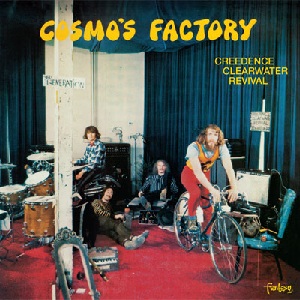
But when Creedence covered it in 1970 for their album Cosmo's Factory, it was turned into an all round great big monster of a tune which they managed to stretch out to 11:07.

Where Knight and Gaye merely alluded to the impending doom of the relationship in their versions, it was clear from the outset that Creedence's version was to be a different kettle of fish. Slightly faster, the dual guitar attack of Fogerty and his brother Tom and bassist Stu Cook set the pace from the outset.

Hirsute drummer Doug "Cosmo" Clifford comes in to set the thing ablaze after the 8 bar intro and it's off chooglin' away down the track, possibly down to New Orleans. "Chooglin'" was a unique Creedence word which probably means something in the neck of the world where they came from - California, funnily enough, and not the deep south - but it appears to me that chooglin' as applied by the band, refers to the part where they nestle into a groove and milk it until the cows come home. Oh that was a clumsy mix of metaphor and cliché.

The main riffs in 'Grapevine' would appear to be perfect examples of chooglin'.

It's often said that white folks have no soul. Whoever dreamed up this stupid saying was one racist fuck, because it's clear from Fogerty's howling vocals that this ain't no ordinary tale of love gone wrong. Fogerty's not only screaming blue murder, but lashing away with his axe during the extended solos like the offending partner in this tale is on the receiving end.

Clifford is obviously in tune with this theme as he slashes away at the crash cymbal at the perfect moment all the way through the chorus ("I hoid it through the grape*smash*vine") and the rest of the tune throughout. Even the fills seem murderously well placed during the solos.

Yes folks, Fogerty had soul. Still does, in fact, but I'll come to that in a future post.

Tom Fogerty left the band the following year after the release of their Pendulum album and they recorded one final album as a three-piece before breaking up in 1972. Tom released some solo stuff before dying in the early nineties of an AIDS related infection contracted from a blood transfusion.

John Fogerty went on to have a weird solo career where, amongst other things, he was sued for plagiarising himself and he became known for his expertise on bottleneck slide guitar. He released an album called Revival last year.

Cook and Clifford played with a number of different bands, and Clifford released his own solo release, before reuniting in the 90s to form Creedence Clearwater Revisited.

Anyway, here's a snippet of this classic track. Do enjoy, but please check out the full eleven minute version. It's just wrong without the extended soloing.


19 February 2008

Rock epic of the month: "Perfect Kiss" (New Order) 1985


Rock epics of the month is a series of posts where I'll look back on classic examples of what I think is the greatest excess of rock and roll - the rock epic.

This month, I have a contentious one. Not because of it's length or the fact that it might be crap (it isn't, by the way).

No. This one is contentious because it might not really be rock. This will, however, be explained a little better shortly.

New Order rose phoenix-like from the ashes of Joy Division in the early 1980's after the death of lead singer Ian Curtis. After a name change and the addition of Gillian Gilbert on keyboards and guitars, they went off in a musical direction which was alternate parts jangly guitar pop-rock, and disco influenced electronic dance music.

"Perfect Kiss" has it's roots in "The Perfect Kiss", a song off their 1985 Low-Life long player. However, the version on Low-Life which comes in at 4:48 is a shocker of an edit which the band were clearly not terribly impressed with. Which is weird, because they'd produced it themselves.

The 7" single is itself a strange one, because at 3:27, it has most of the life sucked completely out of it.

And where some bands in the 1980's such as Duran Duran and Frankie Goes To Hollywood were content to let a producer stretch out one of their songs into a 12" version, New Order went the other way. They took the unreleased epic and released it as a 12", sometimes tweaking it with extra percussion lines.

To be clear, this is an epic that is at it's most listenable at the full 8:46. And it's still available on the Substance compilation.

But that is not where it ends. Oh no.

In 1985, Jonathan Demme came into the studio to direct the band playing this one live. And what an absolute firecracker of a version he recorded. Which is what YouTube is serving us up this month, folks.

But before we get to that let's look at the song in question.

You're under no illusions where this is going from the outset with the TR-808 kicking in and going berzerk.

Not long in, Peter Hook lets rip with the now legendary pseudo-slap bass intro which gets the whole tune happening. No drums in this - Stephen Morris is relegated to keyboardist all the way through. And in Demme's video, Morris and Gilbert just have this quiet look of concentration on their faces the whole way through.

Morris scarcely looks older than 12.

The thing builds handsomely until about halfway through where Hook starts beating the bejesus out of a set of electronic drums while guitarist and vocalist Bernard Sumner tries valiantly to keep up on a cowbell before admitting defeat. And then there's a lull (with frogs) before it builds up again a little more urgently.

And here is where I think that this qualifies as a rock epic. Hook works his bass almightily while the thing builds until it just rocks out in a crazy fashion towards the end. Sumner's guitar just happens to ice the cake perfectly.

And yes. For a dance track, it really does rock.

These days New Order are still a going concern, I'm told, although it's really just Sumner and Morris left. Gilbert went off years ago to be a full-time mum, and Hook told Sumner that the pair of them will never work together again not long ago. How you could continue as New Order without Hook is really something that I don't understand.

Anyway, I do hope that you enjoy this video - the quality is really quite good for YouTube.