11 October 2008

Sam Kekovich Goes Berzerk - Grand Final 27 September 2008


Former North Melbourne great Sam Kekovich apparently had this to say at a speech he made at Centre Square on Grand Final day.

For those of you who are unaware, Centre Square is the name of a corporate function at nearby Punt Road Oval. Attendees go there to get liquored up before moving over to the MCG where they move into their corporate boxes to watch the match.

This is the text of the speech:

My fellow Australians.

I've been invited here to talk to Centre Square, in these big marquees on Punt Road Oval. And speaking of Punt Road Oval, let me tell you something for nothing - Jack Dyer would be spinning in his grave if he could see the place right now. Full of a bunch of Collins Street corporate criminals, Chapel Street designer cats and Toorak poodle rooters who have about as much interest in football as Paris Hilton has an interest in astrophysics.

Captain Blood didn't break every bone in his body and commit multiple acts of on-field heroism and homicide so he could see his beloved home ground turned into an over-priced pre-match party for chardonnay-swilling spivs and their assorted hangers-on attending their one footy match of the year, whilst tens of thousands of hard-working honest battlers who love the game and love their team are denied the chance to attend the greatest game in the world.

I've had a gutful. Whilst this bunch of Armani-wearing, Audi-driving, Prada-carrying try-hards monopolise priceless vantage points in the MCG, millions of genuine footy fans who have followed their team through thick and thin have to make do by watching the game at home or down at the local pub, whilst the Melbourne spivocracy get to sit on their fat posteriors in a marquee and wouldn't even know the way to the MCG without a tour guide.

Since most of you haven't attended a single match this year and know nothing about football, let me give you a few tips - Geelong wears blue, Hawthorn wears brown, and in case you were wondering, there'll be no fashions on the field at half-time, and no, the Lexus Centre across the road is not a prestige car dealership.

Centre Square is not only unfair. Centre Square is not only inequitable. Centre Square is downright un-Australian! And so are all of you! In fact, I bet you're all so un-Australian that you all hate the Anzacs, you booed Cathy Freeman, and you want to cull cute cuddly koalas because one of them once jumped out in front of your Range Rover on the way to Mount Hotham.

But it's not just you who are at fault. I also blame the AFL - those out-of-touch, opera-loving elitists at AFL headquarters who are responsible for this unconscionable abomination need to take a good hard look in the mirror. That is if they can handle the sight of moral and spiritual bankruptcy staring back at them.

I also blame the government. Our new Prime Minister has clearly failed his first test of leadership if he thinks it's acceptable to allow an event like this to go ahead without a pre-emptive strike by the SAS. The PM is doing nothing to ease the squeeze on working families on the bottom rung of the ladder of opportunity who just want to see their team in the Granny. But he'd better get his act together and do something about it, or millions of angry footy fans will do it for him. Revolutions have been started and governments have been overthrown for lesser outrages than this. And people ask why we need capital punishment.

So cut off your silver tails, tear up your fur coats and get fair dinkum. Our great Australian game is the greatest game in the world – the game of the people. Not some once-a-year marquee piss-up for an overpaid, over-dressed pack of passionless corporate cretins who only turn up for the free chardonnay and then spend the actual game looking about as interested and excited as a line of Easter Island statues.

So don't bother coming across to the MCG this afternoon, because you're not welcome. The next train out of Melbourne leaves Richmond station in 10 minutes - so make sure you're on it. Or, better still, under it.

So don't be un-Australian - everyone here in Centre Square can get stuffed! You know it makes sense. I'm Sam Kekovich.


If this is true, I give him five stars.

If not, I still give it five stars.

08 October 2008

Something I noticed recently


Once upon a time, it was the thing that if you wanted to describe something as "gay" meaning lame, stupid or ludicrously ridiculous, you could. Provided that you added the phrase afterwards, sotto voce, "...in the primary school meaning of the word."

If you didn't remember to do this, you were labelled an obnoxious homophobe, and pilloried for it.

I came across something on YouTube the other day (I don't have the link and I'm not looking for it) where someone - presumably not heterosexual - was complaining about people who are prone to describing things as "gay" under this definition.

It was about at this point that I noticed that the primary school definition disclaimer seems to have all but disappeared. I worked, up to last week, in an office where a couple of the team routinely described things as "gay" without the disclaimer, and no one seemed to bat an eyelid.

In fact, so entrenched was this practice that it never occurred to me to see what the reaction might have been from a particular member of the team. A member for whom, as it happens, the disclaimer was invented in order to avoid causing offence.

This got me thinking: Is the meaning of the word "gay" changing yet again? Or has it already done so?

After all, no one really bats an eyelid at someone's sexual orientation anymore. Just look at the fuss that Lindsay Lohan's coming out caused: That's right, folks. No one could give a rat's arse.

What's caused all this then? Is it the rise of Generation Y? After all, this is the generation for whom, if you believe our media stereotypes, still behave as if they were in primary school. It really goes without say that they might have brought a few words of primary school slang with them, if that was the case.

Discuss.

24 September 2008

Blackmail And The Catholic Church


YAAAAAAAAAAAAH! Oh, this makes me sick.

The catholic church, possibly drunk on power after World Youth Day, have signalled that they will close their obstetrics wards if the abortion bill passes through state parliament.

Not content with this, they have effectively told their doctors to consider breaking the law if it is passed.

I sent this complaint to Catholic Health Australia, and have crossposted it to the complaints blog:

Dear sir/madam,

I write to you with more than just a small degree of disgust over the blackmail stunt that you pulled today. I wish to complain about this as it is clear that you are behaving with an infantile level of dignity, decency and decorum.

Your board member Bishop Joseph Oudeman's threat to close your obstetrics wards in your Victorian member hospitals if the abortion bill successfully proceeds through state parliament is a national disgrace. Possibly even an international one. I cannot believe that you, in good conscience, would even consider resorting to blackmail to try to get this law stopped.

I can't even comprehend how you would even find blackmail to be appropriate.

All the bill requires is for doctors with a conscientious objection to abortion to refer women to doctors who do not. And yet, this isn't good enough for you: You have to enforce your concept of "life" on to the rest of us. Whether we're religious, specifically Roman catholic christians, or not.

How could you possibly do this?

All over the state, there are women who are going to need to give birth. According to stats on The Age's website, your hospitals deliver one third of them. Are you going to deny them assistance in a hissy fit over the laws, if they even become that? Law, that is?

And I read that your CEO, Martin Laverty, has stated that you will not require your doctors to comply with the law on this. This is a disgrace, and is completely irresponsible.

I can only conclude that you have the mental capacity of an eight year old who is threatening to take the bat and ball and go home if by chance he is given out. Please confirm when Mr Laverty and your board will be resigning over this matter.

Should you carry out your threat, I wish to advise that my wife and will have no alternative but to use condoms and birth control pills.


Yours sincerely,

Dikkii.

Catholic Health Australia may be contacted here: secretariat@cha.org.au

21 September 2008

Brutal carnage!


We've seen a lot of action on the markets in the last few weeks, and I suppose that some of my regular readers are probably wondering, "Hey Dikkii. You've been awfully quiet on this."

And I suppose that I have. The thing is, I'm neither greatly spooked, nor am I greatly interested. I've had more important fish to fry at this point in time, but I have been following at a distance.

So I thought that I'd get my thoughts down on paper and attempt to try to put together some thoughts on the week that we've just had, because it has been a doozy. I'm not about to go the way of the financial media and suggest that the global market slide that we saw represents the death of capitalism, though. This has been some disgraceful irresponsibility coupled with a complete lack of knowledge about what capitalism really is. However it is interesting to note that where chickens have been coming home to roost, this blogger did see some of it coming.

1. The "Death of Capitalism"

This is just plain lazy reporting.

Capitalism is just the interplay between those two non-physical forces, Supply and Demand. Nothing more, and nothing less.

Supply and Demand, in turn represent the twin human emotions of greed and laziness.

Note that I haven't mentioned fear. Fear certainly impacts on Supply and Demand, but it is not an emotion on what they're built. Allow me to demonstrate:

Imagine that you are a buyer of something that we'll call "doo-hickeys". Greed and laziness suggest that you'll be more willing to buy more doo-hickeys when prices are low, rather than when they're high. Or to put it another way, you are susceptible to a good bargain, and you're turned off high prices. This, folks, is how the force of Demand works.

Let's now switch roles, and suggest that you are the manufacturer of the aforementioned doo-hickeys. It's via greed and laziness that you are willing to pump up production when prices are high, rather than when they're low. Essentially, you're paying in doo-hickeys for money, and when you can get more money per doo-hickey, you want to make the most of it. Which really makes Supply a sort of inverse Demand priced in commodities rather than money.

So how does fear impact this?

Essentially, fear attacks in waves. Usually, fear inhabits a small corner of one's mind, and is not sufficient in its own right to interrupt the greed and laziness emotions.

However, every now and then, the amount of fear that is there reaches a critical mass in an individual, and this will override the greed and laziness to the point where they fail to register. This is called panic.

So for a buyer of doo-hickeys who's financially fearful, they're going to not be so keen on buying those doo-hickeys, because the fact that they're parting with actual cash to get those doo-hickeys becomes worrying. They'll be worrying about the re-sale value of those doo-hickeys. They'll be worrying about whether the doo-hickeys are any good. In short, they'll be worrying. Or fearful, if you like.

Fear affects suppliers of those doo-hickeys as well, but in a different way. Remember how I said that Supply is a kind of inverse Demand? Well, imagine that you're seeing less and less dollars per doo-hickey sold. You may eventually start fearing that doo-hickeys will eventually be worth nothing. You might choose to dump your entire stockpile on to the market, as you fear that to delay might result in this stockpile eventually becoming worthless.

And even though prices are falling, you may even choose to ramp up production in the hope that prices fall even further, allowing you to buy some back later on to sell when prices stabilise, allowing you to realise a small profit for them.

You can see, just from these examples, that Supply and Demand morph into almost entirely new animals as a result of the introduction of fear, however at no point do they go away. Fear just causes greed and laziness to take on lesser importance in the whole system.

Fear also seems to throw rational thought out the window.

And so it is with assets as opposed to the commodity that we've called doo-hickeys. Supply and Demand work in almost entirely the exact same way. Except when fear comes along, and then it's panic stations.

Supply and Demand will not go away. They'll just take on a different shape for a while. The same can be said about capitalism - after all, it's really the same thing.

2. Complex financial instruments

A little while back, I bemoaned complex financial instruments, and how they appear to exist only to generate fees for the issuers of them.

Since then, we saw one capital guaranteed product issued by Macquarie Bank hit the wall and announce that under the rules that it operated under, investors would get their money back. In 2013. But no additional returns would be paid.

No returns at all until 2013 is a frightfully long time for your money to be going nowhere.

Elsewhere, outside these complicated little instruments that are designed to prey on investor fear, we have lovely little terms permeating the financial department stores, and catching investing novices and veterans out alike.

Frankly, people should fucking well go to gaol for Collateralised Debt Obligations, because these little bastards were designed to mislead. How the fuckety fuck can one bundle up a bunch of bad loans as an AAA-rated security I'll never know.

In Australia, we had all these capital guaranteed funds out there that were marketed a bit like this:

You could earn as much as 20%* (*based on market performance). What's more, we'll capital guarantee them, so if they haven't performed in ten years, you'll get your money back.


Investors now are pretty much locked into things that will now look only as good as what they paid for them in the first place. Which makes only the capital guarantee worth something - the representations on returns were something that should have never appeared in print to begin with.

Contracts For Difference - oh these are going to be fun. I'll come back to these a little further on, but I suspect that we're going to hear a lot about these in the months to come.

Look. The upshot of all this is this: If you can't get your head around how a particular financial product works, then for heaven's sake stay away from it.

3. Derivatives, Sub-Prime Loans and the US Housing Price Crisis

In March 2007, I made a throwaway comment in answer to a comment left by Einzige at this blog that we were yet to see the effects of the US housing price crisis.

I was not looking into a crystal ball, people. I was reading newspapers and watching TV, and if people were talking about it back then, then we knew that there was a problem.

Fast forward to September 2008 and we know now where this has lead. Sub-prime loans have basically now brought down nearly the entire US financial system thanks to an oversupply of housing and a sudden rise in interest rates. Is Alan Greenspan to blame?

Hardly, at least in the first instance. What is to blame is a banking sector that assumed that property prices never go down.

Property prices, just like shares, derivatives and commodities go down sometimes. Can you believe that?

Warren Buffett made the bold assertion back in 2002 that the sudden explosion in derivatives was playing with fire. Why, oh why, can't anyone see that if Buffett, the closest we have to evidence of minor deities, is critical of something then it must be bad?

I mean really. Did Orange County, California file for bankruptcy for nothing?

Hmm. Contracts For Difference. Why did that thought just pop into my head again?

4. Freddie, Fannie, Lehman and AIG.

This month has seen bailouts on an unprecedented scale.

Companies should not be being bailed out. Companies should not be so big that they need to be bailed out by governments.

If there is near total domination of a market by a particular company, this is bad. Back in the early part of this century, Standard Oil was broken up. It was too big to allow the market to operate effectively.

We haven't learnt anything from that. In financial planning, a lot is made of diversifying your investments in order to spread your risk. And granted, Standard wasn't about to go down, but no one benefits from this degree of market dominance.

Economies should also learn from this. How the hell could the US mortgage sector be dominated (I nearly wrote "denominated") by just two companies? Just like investors, economies need to spread their risk.

In Australia, banking is dominated by four companies. Five if you count St George Bank, but it's about to be consumed by Westpac, so really, it only is just four.

Once again, this lot are bleating about being allowed to merge further. This certainly shouldn't be allowed. "But it allows us to build scale in order to become globally competitive," they say.

"Go out and build scale in the rest of the world," I say, "You'll have to eventually."

A free market might be about letting companies build this kind of dominance over time. "Free market economics" also suggests that companies genuinely want to pay tax voluntarily, rather than being made to do so. I think you know where I'm going with this.

5. Stock borrowing and short selling

It's been argued that eventually, short-selling en masse will cause even respectable firms to be completely frozen out.

I applaud the efforts of some countries this week in banning the practice.

In Australia, naked shorts were banned. Rather than something out of Benny Hill, this now means that you cannot sell shares that you don't have. In other words, you will now have to borrow them or, gasp, buy them first.

I'm not actually sure how much naked shorting was going on. It must have been quite a bit because on Friday, the market reacted as though share prices had had a bomb fuse lit underneath them. In any event, I'm not sure that hedge funds are solely to blame.

Let's talk Contracts For Difference. Or CFDs, if you like.

In the early noughties, these were introduced on to the market as a mechanism for "spread betting" on the market. You could go long or short, and in later versions, you can now trade them on the market, rather then selling them back to an intermediary and you can get paid dividends on CFDs that you own if a dividend gets paid on the underlying security.

How do the intermediaries who underwrite the CFDs do it? Well, one would expect that they dabble in the market themselves.

And if there are suddenly a lot of their clientele shorting BNB, doesn't the underwriting institution have to short BNB as well?

What I'd really like to know is this: How many short positions on close of business Friday hadn't been closed out when the ban on naked shorts went through? And how are brokers, in the short term, anyway, going to police the ban?

Folks, we are going to see more carnage hit the markets in a big, ugly and undignified way. And even though we consider ourselves immune in Australia, we're certainly not.

I plan to be getting in and cleaning up on the mess that's left behind. But I don't mean fixing it.

Disclosure: This blogger owns shares in Macquarie Group Limited.

Standard but necessary disclaimer: This is not advice. Only a complete idiot would think that any of this constituted advice. It's not even vaguely reasonable to consider this to be advice. If you are in any doubt as to the content of this, see a good, independent financial adviser immediately. They do exist.

18 September 2008

Vale Rick Wright


The world lost another great rock icon this week with the passing of Rick Wright.

Wright was a founding member, and keyboardest of Pink Floyd, along with Roger Waters, the late Syd Barrett and Nick Mason. In the early days, he was the "other" songwriter, after Barrett. About the time that Barrett left the band (OK. Was booted out) he started to take more of a back role in the day to day songwriting, although he's probably best remembered for a piece off The Dark Side Of The Moon called "The Great Gig In The Sky".

Wright sang lead vocals on a few Pink Floyd tracks, "Astronomy Domine" being one, "Time" being another. He had, if not the best voice in Pink Floyd, the nicest one. But in later years, Wright's contributions became less and less as bassplayer Waters and guitarist Dave Gilmour fought it out for creative control of the band.

It's often been argued that Wright was the first casualty of this battle, when he became the second member of Pink Floyd to be sacked, after the recording of The Wall. In reality, Wright and Waters were not the best of friends at this point, and Wright's escalating cocaine problem just gave Waters the excuse to get rid of him.
'
Maybe because of this, Gilmour chose to re-hire him again during the recording of A Momentary Lapse Of Reason - Waters was by now suing Gilmour and Mason for ownership of the name Pink Floyd, and the message that Wright was back in the band could only be interpreted as perfect spiteful timing.

Now clean, Wright returned to songwriting on The Division Bell, Pink Floyd's last studio album.

He also played with Waters again at their one-off reunion gig last year.

He will be missed. RIP.

16 September 2008

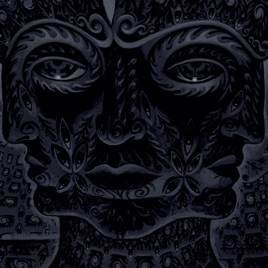
Rock epic of the month: "Lost Keys (Blame Hofmann)/Rosetta Stoned" (Tool) 2006


Rock epics of the month is a series of posts where I'll look back on classic examples of what I think is the greatest excess of rock and roll - the rock epic.

Get a few blokes drunk at a party, and inevitably the conversation will veer over to who is the greatest rock drummer going at the moment. I know this bloke who will maintain until his dying day that John Stanier (Helmet, The Mark Of Cain, Tomahawk, Battles) is "the hardest working drummer in rock and roll".

For me though, there really is only one choice: Danny Carey.

There is something truly amazing about this guy's precision. And unlike Stanier, the guy can swing a bit, too. Not swing, as in the genre, although I don't doubt for a moment that given half a go, he'd probably be able to have a crack at Gene Krupa's wildest work, but swing, as in fall off the beat and back on again in the blink of an eye.

Kinda like what a good jazz drummer is said to be able to do.

10,000 Days was Tool's fourth album, and in one of my rare album reviews, I wrote about being awestruck by not only Carey's stickswork, but by how well him and bassplayer Justin Chancellor work as a team. Tool's sound is very much built from the ground up, and you could probably release an album with just Carey and Chancellor on it - guitarist Adam Jones and vocalist Maynard James Keenan effectively become the flesh around Carey and Chancellor's bones.

I also wrote about being seriously blown away by this tune: I rightly described it as the "piece de resistance" of the whole CD.

Well, a year and several months later, and I'm no less over it. At 14:55, it's still an almighty bitch-slap of a tune, and anyone who says otherwise either hasn't got it, or hasn't listened the whole way through.

It's listed as two separate tunes on the CD, but they're really rammed together as one. "Lost Keys" starts with some eerie air raid guitar and a plaintive lament on Jones' guitar. Meanwhile, after about two and a half minutes, there's some trouble in ER:

Nurse: Excuse me Doctor? If you have a moment?

Doctor: A moment? What's the question?

Nurse: More of a situation. A gentleman in exam 3.

Doctor: What's the problem?

Nurse: That is the problem. We're not sure.

Doctor: Do you have the chart?

Nurse: Right here.

Doctor: Not much here, is there?

Nurse: No doctor. No obvious physical trauma. Vitals are stable.

Doctor: Name?

Nurse: No sir.

Doctor: Did someone drop him off? Maybe we can speak to them. Let's get some background on this fellow.

Nurse: No ID. Nothing. And he won't speak to anyone.

Doctor: Well then. Let's say hello.

Doctor, to patient: Good morning, I'm Doctor Watson. How are you today?

No response

Doctor, to patient: How are you today?

No response

Doctor, to patient: Look son. You're in a safe place. We wanna help you in whatever way we can. But you need to talk to us, we can't help you otherwise. Now, what's happened? Tell me everything.


Which is where it segues into "Rosetta Stoned". And this is where the fun begins to truly heat up.

We now return you to the action in Act 2. The video is just fantastic, just like all Tool's videos. (My apologies about the last minute of the tune or so being cut off)

Edit 16/09/2008: As regular commenter Taj points out, this is not an official Tool video. Not surprising really - who would normally film a video to a fifteen minute rock epic? It's still good:


07 September 2008

Our Newly Appointed Governor-General


It really depends on how you interpret our constitution.

Either our first female head of state was sworn in on Thursday, or our second. Or someone else, who just happens to be the first female to hold that role.

In any event, Ms Quentin Bryce succeeds Major-General Michael Jeffery as our new Governor-General, becoming the 25th Governor-General of the Commonwealth of Australia in the process, and the first female to hold the post.

The former Governor of Queensland is possibly also the first Governor-General to only be entitled to one style or title at the start of her name, not including the "Her Excellency" that she gets by virtue of being the GG. Which she also would have got for being Governor of Queensland as well. This blogger notes that the previous 5 GGs had the following styles and titles (not including gongs, military honours and suffixes):


And since they've retired, Hollingworth and Jeffery will have had "The Honourable" added on to the start of theirs. Which makes it almost refreshing that we can get someone like Bryce who is merely a "Ms".

NB: For the benefit of my international readers, our head of state appears to be defined roughly as the Governor-General on behalf of the British monarch. Hence the confusion about who the head of state actually is. A lot of non-Aussies usually ask me at this point, if they're not the head of state, then what is the role of the Prime Minister? In short, the PM is the head of government: In Westminster parliamentary systems, the two roles (heads of government and state) are separate.

I was prompted after reading about Bryce to go back and look at the Constitutional Convention of 1998 where the question was put about what model republic we would have if we were ever to become a republic. After some serious fighting, it was proposed that a model with minimalist changes should be proposed at a referendum as an alternative.

This model would merely erase mention of the British monarch and change the name of the GG to "President". I would have gone one step less myself and kept the title of "Governor-General".

Some say that the referendum that followed was sabotaged by then Prime Minister, John Howard. Unfortunately, this was misdirected anger, as Howard was a scapegoat for those who really destroyed the whole process. Sure, he did assist in stacking the delegates, writing the referendum motion and the red herring that was the proposed preamble was genius.

The process of Australia becoming a republic was, in actual fact, destroyed by a bunch of "republicans" making a noise about how any future president should be directly elected by the people, not appointed as proposed. Prominent Australians who were opposed to an appointed figurehead and who supported an elected one included Eddie McGuire, Phil Cleary, Ted Mack and Clem Jones. These "republicans" supported a "No" vote in the referendum on these grounds.

I use quotes deliberately to make a point: There have been, since the failed referendum, three GGs appointed. Two of which were controversial: the very controversial Hollingworth, former Anglican Archbishop of Brisbane, and the mildly controversial Jeffery, former Major-General in the Australian Army.

Each of these appointments in turn, called into question the links between church and state, and military and state. And in the case of Hollingworth, was almost completely disastrous.

It's interesting to note, however, that even though three GGs have been appointed since the referendum, not once have any of the "republicans" who supported the "No" vote in the referendum come forward to campaign for a directly elected Governor-General.

(Nor for that matter, have any of these buffoons proposed direct elections for the post of Queen/King of Australia. Which is the post that the British monarch holds.)

I don't think that I'm the first to issue this challenge, but this goes out to all you hypocrites who campaigned for a republic with a directly elected head of state: Either you immediately campaign for (at the very least) a directly elected GG, or you all fess up that you're all closet monarchists.

It's that simple.

27 August 2008

Yes, I have a new favourite TV show


"As you know, weakness is a plague that is destroying this great country, Australia."

So says Steve Foxx, the star/host of cult TV show Double The Fist, which has returned to our screens after a four year hiatus. And you know, I think that he's right.

Australian TV is in a sad place. And, you know, I think that the powers that be really haven't got a clue about why that is.

This is best typified by the sadness that is your average Aussie dad who sits at home in the dark watching whatever woeful British detective show happens to be on the ABC at any point in time, just because the ABC doesn't have ads:

Dikkii: Hey Dad, why don't we flick over to Seven - there's this great new high budget show on that the critics seem to like.

Dikkii's dad: No way. It's American. I want to watch Doc Martin.

Dikkii: That's not exactly a criticism, Dad. I could criticise Doc Martin for being British.

Dikkii's dad: What's wrong with that?

Dikkii: Firstly, nothing. Which is my point. Secondly, I'm not accurately describing the cliched picture postcard seaside English village with the grumpy doctor and countless other stereotypes recycled from The Vicar of Dibley, Bergerac and every other British series. Thirdly, will you hang around to hear me tear into the banal scripting, the bland storylines, the offensive romantic threads, the cloyingly friendly villagers, the... hey dad, where you going?

Dikkii's dad: I'm going upstairs to watch it. You can have your exciting, high-budget American...

Narrator: Given that sister number two married an American, there really is no need for the way he spits out the word "American". Plus, it's unnecessary - he uses it in a derogatory way for American TV, but if you took it out of context, you might think that he had a low opinion of everything and everyone American. Or something.

Dikkii's dad: ...show that you seem so keen on viewing.

Meanwhile, what apparently passes for quality Australian TV is relegated to stultifyingly boring clones of Doc Martin set in the Torres Strait or the Bellarine Peninsula. If I see another "quality" piece of Australian TV set in the country or in a seaside town, I'm going to dry-retch.

The sad state of Australian TV is best exemplified by comedy which was once an edgy and subversive genre typified by shows such as The Naked Vicar, Aunty Jack, Norman Gunston and Kingswood Country.

Now, the best comedy that Australia has to offer seems to come in the form of shows that rely on cleverness for their appeal, such as Frontline or Kath and Kim. And while cleverness can be appreciated, it simply does not perform in the belly laugh stakes compared to idiot humour, toilet humour, double-entendre, smut and slapstick.

Not only that, but as Steve Foxx might say, it's completely weak.

Let me tell you a story about my relationship with Double The Fist.

About three years ago, sister number one gave me a DVD of the first few episodes of the first season of this show. I watched the episodes. I didn't actually "get" them. I promptly forgot about them.

To me, it was another "clever" attack on bogan culture. And an ultra-low budget one at that - season one was reportedly shot for under AUD $250,000.

For the benefit of my international readers, "bogan" is a generic Australian term that roughly translates into North American English as "white trash" or into British English as "chav". Regional variations exist - in Sydney, a bogan is referred to as a "westie", in Hobart, a "chigga" and in Brisbane and Canberra, I believe that terms such as "booner" and "bevan" have been used in the past. But "bogan" has gained national currency over these in recent years.

Unlike their North American or British counterparts, there has never been any outright hostility in Australia towards bogans. Nor is there a racial component - you can be a bogan from an Anglo-Celtic background just as easily as a bogan from an Arabic background.

Indeed, the main characters in Double The Fist are all pretty much bogans.

But that was then.

Fast forward to 2008, and after the event, I hear on the grapevine that Double The Fist has re-commenced a new season on the ABC. Something was tweaking my curiosity about this show: Was there something that I missed the first time around? Did I subconsciously "get it" and not know about it?

So I went and downloaded the first episode.

In the first couple of minutes, it all snapped into place. I got it.

In short, this is a show of pure genius. And it may just save Australian comedy.

Double The Fist is a celebration of what it means to mix fantasy in with reality. It's both a parody, and a far more extreme version of, Jackass, the Three Stooges, B-movies, splatter movies, ozploitation flicks and ridiculous storylines.

It's prime goal, is to find activities that can be deemed to be fistworthy.

It has a plot - in the early episodes, it was this extreme sport show where our four main competitors - Foxx, his brother Rod, The Womp and Mephisto - as well as their ever present sidekick in a Panda suit, Panda go out of their way to try activities that make them worthy of "fist".

They dot this with little snippets where our crew go out to do ridiculous activities to either be awarded "full fist" or penalised with "no fist".

The difference with this as opposed to a show like Jackass, is that (a) humiliation is non-existent - these guys have no shame, and (b) the stuff they do is clearly stupidly life-threatening and probably couldn't be tried at home.

Indeed, in the first two episodes of the current season, there are two deaths but our intrepid posse bounce back as good as ever the next week. Now, they're fighting vampires, zombies, local councils, medieval recreation societies, etc.

In short: fighting weakness.

Shall we meet the characters?

Steve Foxx

An angry, angry man. Foxx is on a crusade to rid Australia of weakness. And host what he describes as the world's greatest TV show. At the end of season 1, he found himself in space.

He returned to earth the fistworthy way, of course:


Rod Foxx

Rod sees himself as a ladies man and all round athlete. Which translates as a bit of a sleaze who clearly wanks in front of mirrors. Since the end of season 1, he's grown what can really only be described as possibly the most spectacular mullet ever seen.

He also likes to watch certain sports:


Mephisto

Mephisto is a nob. And a dodgy one at that. Supposedly, he's a failed security guard who's wanted by tax authorities in multiple locations.

He's always thinking ahead:


The Womp

An ex-wrestler in a state of arrested development. The Womp has a high pain threshold, supposedly because he suffered a brain injury when he was younger.

Womp has been getting work as a stunt clown at demolition derbies:


Panda

Foxx's assistant. It speaks volumes that Panda is both female and the smartest one of the whole crew.

Panda is Panda (from season 1):


So there you go.

Just before I finish this off, get a load of the trailer for season 2 - talk about over the top:


I'll say it again: This show is sheer genius.

Download episodes 1 and 2 here and view them, or are you unworthy of fist?

18 August 2008

China and the Olympics


It's just fantastic what we hear from Beijing during these Olympic Games. I personally would like to know who the fuck is "Chinese Taipei"? Why can't our craven media call them Taiwan? Why do we have to sit through hearing athletes from "The People's Republic of Korea" and "Korea" when everyone knows these countries as North and South Korea? Why does our idiot team of TV commentators then insist on calling the Czech Republic "Czechoslovakia"? Why not call Georgia the "Soviet Union"? Or would this be just too wrong?

But this post is about putting the boot into China.

First of all, we heard that the footage of the fireworks for the Olympic broadcasts from the opening ceremony were faked. Nice. China, the land that invented fireworks couldn't be arsed to do it properly themselves.

Then, we heard that not only was there a good reason why seven year old Lin Miaoke, the little cherub who won over our hearts with her rendition of "Ode To The Motherland", appeared to be miming: She didn't even sing the tune that she was miming to. Another seven year old named Yang Peiyi had recorded the song for Lin to mime to. But, because her adult teeth were starting to come through, she simply wasn't photogenic enough for the Chinese.

Now, we hear that all the kids representing the ethnic minorities of China were, in yet another instance of Beijing pissing all over the rest of the country, Han Chinese. The Han are, of course, the ethnic majority.

Let's put this in perspective. It's 2012 and London is hosting the games. Imagine if they decide to have a bunch of kids from all over the country, and the little tyke representing some Welsh coalminer's daughter turns out to be someone named Trace from Essex. The resulting riots would end the Olympic movement for good.

Of course, we're not going to see riots in China. Oh no, the limitations on all the foreign journos have put paid to that. We're not going to see Tibetans, Uighurs, or any of the other Chinese minority peoples protesting. China is still a vastly communist country when it comes to law and order, even if it isn't much anymore from an economic perspective.

Wang Wei, the Executive VP of the Beijing games organising committee is on record as having accused the foreign media of "nitpicking" over these, and other controversies which have dogged the games so far. While Wang's refreshingly un-Chinese touch of 'tude is to be admired, one can't help but notice the question that it begs: Exactly how big does a controversy need to be to raise it above the status of petty "nitpicking"?

15 August 2008

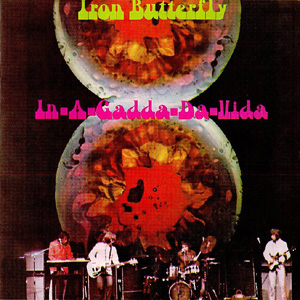
Rock epic of the month: "In-A-Gadda-Da-Vida" (Iron Butterfly) 1968


Rock epics of the month is a series of posts where I'll look back on classic examples of what I think is the greatest excess of rock and roll - the rock epic.

Some of you are thinking, 'It had to happen.' Some of you are thinking, 'Couldn't he have avoided this one?' Some of you are thinking, 'It took him long enough.' And some of you are thinking, 'This is just too obvious.'

To which I say, 'Der,' 'No he couldn't have,' 'I was getting around to it,' and 'Sod off you wankers. And the horses you rode in on.'

Yes. The classic Iron Butterfly song, or I. Ron Butterfly song, if you really want, was a drug-addled hoot when it was released back in the day, and it's still one incredibly silly and indulgent piece today.

Heavy metal, as we now know it didn't really come into being until the power metal bands of the late seventies and early eighties. But it's history is shrouded in all sorts of stories.

Some say it started with The Who when Pete Townshend went berzerk with a series of windmill power chords. Still others like to cite The Kinks' classic rifforama from 'You Really Got Me'.

Some say it was white boys playing the blues loudly, such as the early work of Jimmy Page or Eric Clapton in the Yardbirds. Others again like to cite the work of Jimi Hendrix, Cream (which also featured Clapton) and even The Doors.

And then there are the pure psychedelicists, who will go straight to the louder end of the psychedelic spectrum to where acts like Steppenwolf, Blue Cheer and Iron Butterfly sat.

Whatever, we all know where it went from here. There was the Led Zeppelin faction, with their fairies at the bottom of the garden and bustles in your hedgerows. There was the Black Sabbath faction, with all Tony Iommi's riffing and Ozzy Osbourne's internal demons. There was Deep Purple's work, which partly paved the way for prog rock. And there was the totally out there amped up post-psych of Blue Öyster Cult and the totally pedestrian musical stylings of Grand Funk Railroad.

But Iron Butterfly will always be remembered for this, the one tune that everyone remembers them for - a tune that clocks in at 17:05, and the title track off their second album.

'In-A-Gadda-Da-Vida' was so long that it took up the entire length of side B. The name of the tune apparently comes from a drunken conversation that singer and keyboardist Doug Ingle had with drummer Ron Bushy where Bushy wrote down what he thought Ingle had said, and thus the tune was no longer titled 'In The Garden Of Eden' any more.

The band, completed at this stage by Eric Brann on guitars and Lee Dorman on bass, recorded this monster epic as a jam in the studio where everyone has their moment.

It starts off with the signature horror-movie organ at the start, before launching into the main riff, which, to 1968 society, must have seemed like one of the heaviest things imaginable. The tune only really strays from the main riff in a couple of spots, mainly during the choruses, but also a bit during the breakdown in the middle. Dorman manages to stay in the groove most of the way through without sounding too bored.

It eventually re-assembles itself to come back for another verse and chorus near the end, but by this stage, you're either thanking the gods of rock and roll, or falling asleep.

The breakdown itself is truly epic, and longer than the rest of the tune: There's more than one organ solo. And more than one guitar solo. And even a drum solo. This is one tune that will have you punching the air and giggling as you play it loud to annoy the hell out of your girlfriend, or cringing in a corner hoping that no one catches you listening to it.

There simply is no middle ground here. It's either monumentally offensive and stupid, or it's a glorious slab of medium-octane rock that you can air organ to.

Iron Butterfly did nothing else of note.

Boney M, incidentally, covered this tune. And like everything else that Boney M did, it too, was utter rubbish.

This tune comes in two parts, with some visuals, which are pretty boring, so you might prefer just to listen.

Part 1 ends just after the drum solo, and Part 2 picks up with the second (or is it the third?) organ solo.

Enjoy, or not.

Part 1:


Part 2: