30 April 2009

Rock epic of the month: "Dry The Rain" (The Beta Band) 1997


Rock epics of the month is a series of posts where I'll look back on classic examples of what I think is the greatest excess of rock and roll - the rock epic.

I wasn't about to let another month go by without doing one of these, but I thought I'd open with some correspondence that I got from a regular reader a little while back. In it, he complained that that I've never made it clear what a 'rock epic' is.

Actually, I did, way back in the first one in this series, however I will re-state it:

There are no hard and fast rules for what a rock epic actually is, but the general agreement is that it needs to go for more than 6 minutes and has long bits where there are no vocals.

Another complaint is that when I lead into the song itself, I seem to end abruptly. I can only attribute this to the fact that I normally try to embed a YouTube video of the tune in question at the end of each post.

Naturally, the YouTube vid doesn't make it into the RSS feed or my emails, if you get my posts in your inbox. So you'll have to click on the post heading if you want to hear the tune.

With that out of the way, please allow me to roll on to this month's rock epic, which is "Dry The Rain" by The Beta Band. A Scottish band from St Andrews who formed in 1996, they were the pioneers and to my knowledge the sole proponents of a genre known as "folk-hop". Obviously, that's a blend of folk and hip-hop.

I never understood the Beta Band until after they had broken up, but this tune, man it pushes all the right buttons. Six minutes and five seconds of blissful mellowness.

This was on their Champion Versions EP, which was the first recording that they released. Later on, it would be bundled in with the The Patty Patty Sound and Los Amigos del Beta Bandidos EPs to form their The Three EPs compilation in 1998.

The thing that made this song is that scene from High Fidelity. Barry, played by Jack Black has been having a great time blasting "Walking on Sunshine" by Katrina and the Waves in a record store owned by Rob Gordon. Gordon (John Cusack) goes mental and takes it off. Not long after this, he says to Dick (Todd Louiso), "I will now sell 5 copies of The Three EPs by The Beta Band,"and rips into this tune at about the 3:40 mark.

But this ignores the build up. The intro and verses of this tune are reasonably mellow and jangly. After the second chorus the thing just builds and builds and builds until the certifiable money shot of the tune at 4:06 or thereabouts. The vocals come back in for the outro ("If there's something inside that you wanna say...") while a trumpet and a flugel horn wail away over the top.

Man I love that bit.

Anyway, here it is from YouTube. Enjoy the bejesus out of it folks, because it is quite frankly immensely powerful for what essentially a jangly little tune.


06 April 2009

Cracking the sads with the media, episode 426: The GFC and superannuation


Those who read this blog will know all about my thoughts on the media. Some of you will also be probably saying, “There’s been a GFC. Why have you been so silent?”

I admit to being busy with other stuff in meatspace, and I haven’t blogged in a little while, so shame on me. But finally, I’m going nuts again, and you can all shut up and read for all I care because there’s stuff that simply has to be said.

The media has been all over superannuation funds for quite some time. True, this is the biggest exposure Australians will ever have to volatile investment markets outside their own home. And yes, for those of you who like to read between the lines (you know who you are) there was a subtle dig buried in that sentence.

Part of the negative press aimed at super funds is simply unwarranted, and here’s the reason why: Chances are big that you need to shoulder what could potentially be the lion’s share of responsibility for that diminishing nest egg.

That’s right folks. You, or at least most of you who are reading, are almost fully culpable. Not your super fund. Possibly your financial adviser, if you have one, but this ain’t aimed at you if you have. That will be the subject of a different post, so if you have a financial adviser, you can consider yourself in the clear. At the moment.

For those of you who don’t use a financial adviser, I suspect that you are having a grand old time criticising your super fund for what is, for most of you, a year and a half of negative returns. Let’s face it; we love to have a go at stuff that shits us. As a nation, we love to stick it up the poms when they’re complaining, but to be frank; we’re a nation of whingers. Possibly even worse than the English.

We’re also a nation that hates to accept personal responsibility.

Put these two traits together, and you’re left with the kind of sensationalist reporting that sees the media (News in particular, but Fairfax is a close second) putting out tripe like this or this and Australians lapping it up like the sheep that that they are.

I’ve said it before and I’ll say it again: Australians are shithouse investors and it’s time that you were all told. As an investor, the chances are that if you’re reading this, you suck.

Permit me to now explain why you potentially suck.

Superannuation is not a type of investment. It’s a tax environment.


John Smith (not his real name) is 58 and recently retired. Naturally, he’s rather upset at his super fund’s return of -20% over the past year. And he’s only in the fund’s ‘balanced’ option.

He spots an ad for an online account in the newspaper paying 4.50% and thinks to himself, “At least this is positive.”

John empties his super fund and sticks the entire amount, lock, stock and barrel into this online account. John is, quite frankly, a goose.

On John’s current marginal rate of tax (30%), the rate of interest becomes less attractive at 3.15%, not including Medicare.

On top of this, John simply doesn’t want to know that he could have invested in a cash option in his super fund which is only taxed at a concessional rate of 15%. He’s that pissed off. In fact, the bank that offers this account also offers an identical account to self-managed super funds, thus yielding a superior return after tax of 3.825%.

And because John is not 60 yet, he’s going to be in for a fright at tax time when he finds himself hit with a tax bill in the tens of thousands of dollars on his lump sum super withdrawal.

Can it get any worse?

You bet. John also couldn’t care less that, had he switched to the pension phase of super, his assets aren’t even subject to tax on their earnings. Holding this online account within a self-managed super fund in the online phase would have yielded the full 4.50%.

Not only that, because John has withdrawn the amount from super he is going to have serious problems if he ever wants to start up a super pension, because he won’t be able to get the whole thing back into super if he tries. Amounts able to be contributed to super in a financial year are subject to contribution caps, which limits his flexibility in this regard.

John might be a retiree, but I have no sympathy for him.

Notice that I haven’t talked about John’s potential exit fees, John’s lost insurance coverage or the likelihood that he’ll miss a market upswing. Well I wasn’t going to, anyway.

You choose your investments (part 1)


Jo Phelps (not her real name) is 40 and a manager with an HR recruitment firm.

About a year and a half ago, she received her annual super statement from her fund. Jo was in the balanced option of her fund which had been performing quite respectably for the past four years posting regular returns of 15%.

Her balanced option is about 70% shares and property and 30% cash and fixed interest.

But when she saw the returns on the fund’s ‘high-growth’ option, her eyes lit up as it showed average returns of 25-30% regularly over the past 4 years. The high-growth option is predominantly shares with a smattering of property. There is about 3 or 4 % cash in the portfolio.

Jo rings up her fund and demands to have a switch form sent out. The staffer on the end of the line helpfully suggests to Jo that she speak to a financial adviser before going ahead with the switch.

Jo helpfully suggests to the staffer that she takes her offer of financial advice and sticks it where the sun doesn’t shine, because after all, all financial advisers only recommend stuff with kickbacks for them. “I don’t need a financial adviser,” she casually mentions, “please just post the form.”

The switch was processed and now Jo feels shell-shocked by negative returns of -35%.

Jo would like to know this:

  1. Aren’t fund managers meant to see this sort of stuff coming and take action to stop it?
  2. I mean, I know that there’s no such things as psychics, but couldn’t they have short-sold or something? and
  3. Given that employers have to contribute into superannuation, how come the government can’t guarantee it like bank accounts? I mean really, all Australians should be protected from the downside, shouldn’t they? They guarantee bank accounts; superannuation funds aren’t really that different…

Jo had no idea that a high-growth option could go down as well as up. Mind you, if you’d told her a year and a half ago, I don’t think she would have given a stuff.

You choose your investments (part 2)


Brad Dawes (not his real name) works in a blue-collar job. He’s twenty-something.

When he started with his current employer, he couldn’t be bothered filling out the super forms. He did ask at the time, “So let me get this straight: I don’t have to fill this in. You’ll sort it out for me with this ‘default’ thingy?”

To which the answer was, “Yes”. Natch.

About the only form that Brad filled in correctly was the bank account details for where he wanted to be paid.

The super from Brad’s current job now goes, by default, into the balanced option of the default super fund offered by his employer. Brad doesn’t know how these funds are invested, and really couldn’t care.

Brad’s super is all over the place. All default funds provided by previous employers and all different.

All the negative press about super has Brad looking at the one or two statements (out of the six or so funds he’s ever joined) that he regularly gets. Brad now has the following criticisms of super:

  1. I could invest my funds better than my super fund could;
  2. What’s with all these fees coming out? This is a scam;
  3. What do you mean, ‘Share prices have gone down?’ Isn’t super meant to be invested in property which never goes backwards? (This is Brad’s opinion, not mine)
  4. I didn’t choose to have my super here. I shouldn’t suffer as a result.

About the only good thing you can say about Brad is that he’s finally shown some interest (even if only passing) in his super as a result of this.

But he’s dead wrong about not choosing to have his super where it is: He chose alright. He’s also not worthy of sympathy.

Retirees are not always worthy of extra sympathy


Let’s go back to John Smith again. Sorry John, but you’re particularly worthy of some stick.

About three years, John decided he’d retire when he turned 58.

John’s super was in the balanced option, which his super fund recommends for periods of 4-5 years or longer. That’s right: 4 to 5 years minimum.

John consciously chose to leave his super in the balanced option, because, “It’s doing pretty well there.” Unlike Jo, he looked at the more aggressive options and thought that they seemed pretty aggressive for him. That’s OK.

He looked at the less aggressive investment options and was put off by the lesser returns. And I’m sure you can see why.

But, looking at the recommended minimum timeframe on his balanced option, he thought, “Well it’s only a recommendation.”

Fast forward to a year and a half ago. John looked at his super fund again, and he thought the exact same thing.

That’s right. With a year and a half to go until retirement, John completely disregarded the recommended minimum investment periods and consciously chose an investment option suited to 4-5 years or longer.

John is now shitted off with his super fund when really, John should be shitted off with himself.

It’s probably worth mentioning that you should plan your exit strategy from the outset. John didn’t even do this with three years to go.


So what can investors learn from this?

  1. You choose your investments. Read the sodding disclosure statements – they may look like slickly produced marketing paraphernalia (and to be honest, most are) – but they have to contain stuff you need to make an informed decision.
  2. The default option isn’t some kind of magical tool that posts excellent returns while protecting investors from market downturns.
  3. Read the bits about how your funds are invested. Also read the bits about recommended minimum timeframes. If you don’t understand how an investment option works, ask an adviser, ask the fund and if they can’t tell you, steer the fuck clear of it.
  4. No one is psychic. Especially not fund managers.
  5. Have you switched to cash? You may learn the hard way that markets can rise violently as well as fall. Chances are you’ll miss out and by gee, won’t it be costly?
  6. No one rings a bell to let you know that the market has bottomed out. Think of this if you’re attempting to time your way back in.
  7. Super investments are taxed at 15 %. Non-super investments are taxed at your marginal rate. This should be a no-brainer but you would be surprised at the number of people who couldn’t give a shit about this.
  8. When you next whinge about your super fund’s non-performance, compare it to something that vaguely resembles it. Comparing a balanced option with anything other than a balanced non-super managed fund is only going to make you look like a moron. Even that is pushing it. Do not compare a balanced super option with an online bank account – geez do I have to spell it out?
  9. Good, fee-for-service financial advisers are there to help out people who know bugger all about investing. There is a very good chance that you form a subset of the latter half of the previous sentence.
  10. I’ve heard people whinge about their super fund’s performance who are in defined benefit schemes. I’m not kidding. If you don’t know what investment option you’re in, or even the fund’s design, find out. Number 3 above should help you.

That’s it. I’ve had a gutful. You can all get stuffed.

Disclosure: This blogger works for a service company that services super funds. He also used to work as a financial planner. And he most likely posted bigger declines in his superannuation balance than the lot of you (if expressed in percentage terms).

Standard but necessary disclaimer: This is not advice. Only a complete idiot would think that any of this constituted advice. It's not even vaguely reasonable to consider this to be advice. If you are in any doubt as to the content of this, see a good, independent financial adviser immediately. They do exist.

01 April 2009

The return of sharpies


Yes folks, I'm calling it now. Sharpies are back.

We had the short-lived bogan revival, but now it's time for the real deal. We've already seen the return of the rat's tail at schools around the country, but now the clippers are coming out and it's business all round, except the tail. Or even the mullet-light.

And with the heat on bikies at the moment, it's time for those with rough as guts tendencies to find new digs.

I'm celebrating this by hucking up and spitting forcefully into the eye of good taste. Slipping into a pair of skin-tight acid-washed ankle-freezers and bunging on my cardie, it's time for me to ching! ching! ching! cash in on this ferocious era.

Yes, it appears that the [I was threatened to remove this, so I did] had it all over their rivals in Forest Hill, so this one's for them:

[Censored due to similar bullying]

And we all remember those pricks from Funkytown:


And for those of you who fondly remember the days when the inner suburbs were a place of bloodshed and pain - and not the oasis for yuppy wankers that they are now, here's a fond little reminder of when things were BAD:


And I wasn't talking bad in the Michael Jackson sense, oh no.

But wait folks. There's more.

The infamous Footscray Sharps are back with an almost exclusively female brethren (sistren? I give up). Here's one for you, sisters:


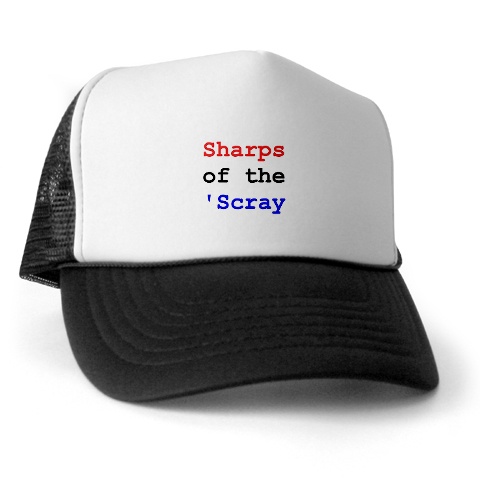
Trucker's caps are popular these days.

Here's a little something that I prepared earlier:

Speaking of hats, the little known Toorak Sharps are back too. I plan to cash in on that as well, assuming that Mummy let's them play:


Finally, here's my favourite. Just one for my homies:


Remember, kids: Order yours two sizes two small otherwise you won't look authentic enough.

Edit 16/09/2009: I was bullied into removing certain items from this webpage. If you're reading this, you know who you are, and I'm not amused. There's nothing artistic about threats of litigation.

10 February 2009

Dikkii re-enters the blogosphere?


I've been a bit quiet of late. A bit of work. And, for some reason, I've started studying again.

Plus I'm doing some more stuff on the music front - I recently joined another band, and apparently I'm going to get more work with another one that I haven't played with for a while.

The new band is relying on me to write arrangements which is quite a lot more time consuming than I remembered. Some might ask, "Well why don't you just do that the jazz way where you just write a 'head' and then let the music form around that?"

Sorry, my mind doesn't work like that.

Songs to me are little planets all of their own and need to be fleshed out with their own little microcosms before you let the natives trample all over them. I find it really unfulfilling when you leave a tune as a kinda 'Argo City' thing and expect it to add its own surrounds. Particularly when you have dreamed up a great intro or ending. Or even a good middle 8.

I don't even write my own stuff: Imagine how time consuming this would be if I did? All I do is arrange other tunes - although I think that I have a pretty good ear for what works and what doesn't.

Summer is hectic down here, and I'm finding that I simply don't have even the time to read the blogs I love reading. So sorry all you folks who write great stuff - you know who you are. Eventually, I will come back to the blogosphere with a passion.

We've had heatwave after heatwave here as well as particularly nasty bushfires, and I work with someone who lost their house to the fires. It's goddamned nasty that the fire authorities believe that most of them appear to have been deliberately lit.

I have a bit of travel for work lined up in the next few weeks, and I know that this will keep me from blogging as well.

But do stay tuned - I will be back out there, eventually. I just have to try to find some kinda space.

Party on, y'all.

09 January 2009

If I hear of another US industry being bailed out...


This from AAP:

Two porn moguls, including Hustler magazine founder Larry Flynt, are seeking a $US5 billion ($A7 billion) bailout from Washington, arguing that the limp US economy has thrown cold water on the adult entertainment industry.

Flynt and Girls Gone Wild video series creator Joe Francis asked the newly convened 111th Congress "to rejuvenate the sexual appetite of America" in a bailout move similar to the one set aside for US auto manufacturers.

"Congress seems willing to help shore up our nation's most important businesses, (and) we feel we deserve the same consideration," Francis said in a statement.

"In difficult economic times, Americans turn to entertainment for relief. More and more, the kind of entertainment they turn to is adult entertainment."

The pair were quick to admit that "the 13-billion dollar industry is in no fear of collapse, but why take chances?"

Francis, recently imprisoned for nearly a year on a prostitution-related charge after pleading no contest in a plea bargain, cited industry figures that show adult DVD sales and rentals decreasing 22 per cent in 2008, as people turn to the internet for adult entertainment.

"With all this economic misery and people losing all that money, sex is the farthest thing from their mind," Flynt said.

"It's time for Congress to rejuvenate the sexual appetite of America. The only way they can do this is by supporting the adult industry and doing it quickly."

Flynt said people were "too depressed to be sexually active."

"This is very unhealthy as a nation. Americans can do without cars and such, but they cannot do without sex."

The original article might be found here.

23 December 2008

Obligatory holiday post


Hi all.

I'm off on Wednesday for a few days up the coast soaking up the balmy sea air and avoiding sunburn.

For those of you who read my blog from colder climes, there is something truly wrong about singing Christmas carols about snow, roasting chestnuts and one-horse open sleighs when the weather outside is verging on 35 to 40 degrees. Celsius.

(Or, if you like, spare a thought for Sean the Blogonaut. He lives in the middle of Australia where the temperature gets into the mid forties during the day, and then plummets to seriously cold levels overnight. Thank goodness we at least have the moderating influence of the sea where I live)

On Christmas Day, normally, I will be up around midday - because I like to sleep in. Then I will get up and stuff myself silly on turkey, ham, salad, maybe some chicken, prawns, Balmain bugs or lobster (depending on availability - looks like lobster is out this year), mussels and a variety of deserts including pudding.

Then we might get in a trip to the beach before opening presents, having a nap and then finally passing out in front of the TV in a bloated state.

It's all good.

So anyway, on to my annual holiday post.

Bloke of the year goes to Joe Biden, who, after spotting that Dick Cheney was planning on scuttling away without anyone noticing, put the boot in and shitcanned him, calling him, 'the most dangerous vice president we had probably in the American history'.

Dick Cheney, you might recall is still currently the Darth Sidious character to George W Bush's Dark Helmet. An odious guy who will be remembered for pulling the strings in the worst administration in US history. Oh yes. Harding, Nixon, Hoover - they had nothing on the Cheney Bush Administration in terms of general awfulness.

But enough of this. Here's some holiday reading for you:

Dikkii's Greatest Hits for 2008


=10. Go Placidly Amid The Noise and Wait

=10. Something I noticed recently

=10. Are Fiscal Deficits Really That Bad?

=10. Yes, I have a new favourite TV show

9. Keysar Trad on polygamy

8. The art empire strikes back

7. Brutal carnage!

6. Denial. Or why people actually drink.

5. One more and then I'll shut up. For a while...

4. Holy Frottage, Batman!

3. Blackmail And The Catholic Church

2. An open letter to artists everywhere

And, you all know how I love to big-note myself. I bet you can guess what is going number one here:

1. This blog is culturally significant. Official.

So party on and enjoy the summer. And, if you're reading this from the Northern Hemisphere, OUCH!


Edit 05/01/2008: Yes, I know that this didn't go up until January. I totally thought I'd posted it, when I in fact hadn't done so. I was in a hurry to pack and go off to the coast at the time. For the record, Christmas lunch was turkey and cranberry sauce sandwiches in a picnic area in the remotest corner of East Gippsland, Victoria.

04 December 2008

Guest Rock Epic of the month

Greetings,

Dikkii has graciously allowed me to present this month’s rock epic. I am not really sure of the format but will endeavour to produce some interesting reading. I have decided to give everyone an insight to a wonderful performer who I finally had the privilege of seeing over the past weekend so the basis will be a run down of the concert and some quiet thoughts from the Hulk. I hope you enjoy.

It is a rare occurrence these days when one has the opportunity to witness a truly great performer, artist, lyricist and ambassador to the music industry who has been around for more than a couple of years and whose music catalogue extends further the one great album. I truly believe these days that so many are quick to point out how good a performer is based on nothing more than maybe one or two top forty hits. Sure they may be a good performer but will they one day be truly great? Do they write their own lyrics? Do they play an instrument? Do they have a degree in music of some sort? Have they played with some of the other truly great performers of the world? And furthermore has their music stood the test of time where they are respected worldwide not only for their performances but for the substance that their art has delivered and continued to deliver over many years?
I had the privilege of attending a show with one such artist on Saturday night and if I were to use the word great to describe it that would be a gross understatement. I am talking about none other than Billy Joel. A man whose humble beginnings playing in a piano bar turned into international superstardom over a 30 year plus career. From the very beginning before even entering the concert you can tell how this man has survived for so long in arguably one of the toughest professions in the world, especially at the present. The excessively wide age gap between the crowd said it all. It was clear to see how many generations had been positively affected by this man's art.
Song one answered many questions such as: Is he going to be able to play his songs as good as he used to? Is he still just as adept on the piano? etc. To put it in perspective, the man is 60 plus years old and starts the show with "Angry Young Man". For those who don't know this song, it starts off with one of the fastest piano pieces imaginable and for a person of that age endeavouring in such a task and completing it perfectly quashed the questions you may have had in relation to this with the utmost authority. Proceeding on, many performers I have noticed do little or the bare minimum to incorporate the crowd and personalise it. Come out, play songs, say thanks, concert over. The same cannot be said for Billy. Immediately after this first song he addressed the audience and when I say that, he actually had a chat like we were sitting on the couch at home having a beer and a ciggy. This made it feel like you were the only person in the room. A refreshing change I must say. But what I think it says more is that it shows the difference and maturity compared to someone a little less "seasoned" in the art form.
From songs such as Big Shot, Allentown, a haunting and a slightly bluesier rendition of New York State of Mind to the later classics such as We didn't start the fire, he did not miss a beat (Pardon the cliché). Other notable performances were, You May Be Right, Only the Good Die Young (which was a song written in reference to him trying to top himself apparently) Its still rock and Roll to Me etc. The most wonderful thing he did though was too play some of the more obscure songs that are never heard on the radio but are equally as good, at least for all the die hard fans. I refer to this as he played a song off the Turstiles album called Vienna. A song that he wrote referring to the 2nd World War where he is basically saying "Don't worry, Vienna will always wait for you" being the city that remained independent of the war itself, (or mostly). This was a treat which I did not even imagine witnessing. Having said that, it was a clear illustration of what a great performer or wannabe great performer should try to accomplish.
The rest of the show had all the bells and whistles without "over production" and ridiculous pyrotechnics which do nothing but take the emphasis away from what you are actually there for. Also worth a mention, he decided to get one of his roadies up on stage and while he jumped off the piano and grabbed a guitar, his roadie sang Highway to Hell by AC/DC. Another indication of a performer who understands his audience. Skilled art? I will let you decide.
Through the many great albums and an endless list of “actual” hits that most would know coming off albums such as Streetlife Serenader, Turnstiles, Piano Man, Glass Houses, 52nd Street and so on, the concert could have gone on all night without a break from the crowd singing every word, but it did not need too. It was all answered in the climatic ending when 15,000 or so people, all on their feet, arm over each other shoulder, Billy on the piano and a Harmonica around his neck singing the one and only...... Piano Man.
It was a a remarkable experience and one I will remember affectionately for a long, long time and even though I am a tragic fan, I would still, as unbiasly as possible, recommend giving yourself the honour of being in his audience if you get the chance. Most of today’s acts are incomparable, but I do hope some of the musical talents in the world take a leaf out of Billy Joel's book so future generations can experience what we all have.
This will conclude my guest role on Rock Epic of the Month. I do thank Dikkii for the opportunity and hope you enjoyed it. I will look forward to any comments you may have.

The Hulk.

The Series Reboot


A little comedy gem that I found this year was Review with Myles Barlow. Hilarious. Basically, it's a bit of a waltz through the sheer pretence that is arts review programs.

ABC and SBS have a few of these, but after Review has been on air, I'd be surprised if the ABC shows one again for a little while.

The twist is that Barlow (played by Phil Lloyd) reviews anything.

Here's Barlow reviewing bareknuckle boxing:


And here's Barlow reviewing open heart surgery:


Barlow reviews lying:


At The Movies co-host David Stratton reviews Barlow:


Which leads to this exchange where Stratton kicks Barlow's arse:


I start with Myles Barlow, because I'm going to do a review of my own. Basically, the series reboot is totally in at the moment.

I've just seen Quantum of Solace, the second in the rebooted series of James Bond flicks and boy, do I feel confused.

The series reboot thingy is more than just a remake. It goes beyond just remaking a movie franchise to completely redesigning it from the ground up.

When Casino Royale came out in 2006, it basically threw away the previous movies and started from the beginning again. It was as if Blofeld, Tracy Bond, Q, Pussy Galore and Holly Goodhead didn't exist. Which might have been a good thing.

Bond was probably getting stale. I once remarked that tradition dictated that each Bond movie had to be more over the top and unbelievable than the previous one. This tradition had to come crashing down in a screaming heap eventually, which it did with Pierce Brosnan's last outing as 007 in Die Another Day. I enjoyed Die Another Day. At least I did up until the clearly fake computer generated wave off the coast of Iceland that Bond surfs down the face of. After this I felt a bit queasy for the rest of the movie and didn't enjoy it so much.

The spy thriller movie had a serious workover with the superb Jason Bourne trilogy. Obviously, this made the producers of the Bond movies sit up and take notice, because they completely re-engineered Bond for Casino Royale.

Not long before this, though, Christopher Nolan had given Batman the reboot treatment with the excellent Batman Begins, followed by The Dark Knight which was also excellent. Soon enough, others had to follow - Superman Returns did a partial reboot in pretending that the (admittedly piss-poor) Superman III and IV movies were never made, and The Incredible Hulk tried to make up for the Hulk movie of 2003.

So on to Quantum Of Solace. Is it just me, or was I watching two movies at once?

We had an old Bond movie - tuxedos, hotels, incidental music with new Bond - improved car chases, fight scenes, rooftop chases.

We had two plotlines - a simple one, and an utterly convoluted mess.

We had the same actor playing M (Judi Dench) as the old M. And essentially the same character. I still think that this might be a smidge anachronistic.

We had hi-tech resources at MI6, but no hi-tech toys for Bond himself.

And we had a bad guy with a stare that seemed almost like Auric Goldfinger was back.

Don't get me wrong - Daniel Craig is great as the new "gritty" Bond. And I like the idea of a reboot - let's face it, the old movies didn't have a great deal of respect for fans with their cavalier attitude to continuity. But are they "Bond movies"?

Stratton and Margeret Pomeranz gave this three stars. I concur.

28 November 2008

Save the Net


The Get Up! group has launched their campaign against mandatory internet censorship. It's worth getting behind.

For those who don't know, the federal Minister for Broadband, Communications and the Digital Economy, Stephen Conroy is proposing internet censorship at ISP level. In my opinion, the moves being planned are an INTERNATIONAL DISGRACE!!!

From Wikipedia:

In October 2008, Senator Conroy announced that filtering of illegal material would be mandatory for all Australians, and there would be no opt-out provision.

Wikipedia refers to this article to cite this.

From Get Up!'s website:

The Federal Government is planning to force all Australian servers to filter internet traffic and block any material the Government deems ‘inappropriate’. Under the plan, the Government can add any ‘unwanted’ site to a secret blacklist.

Testing has already begun on systems that will slow our internet by up to 87%, make it more expensive, miss the vast majority of inappropriate content and accidentally block up to 1 in 12 legitimate sites. Our children deserve better protection - and that won't be achieved by wasting millions on this deeply flawed system.

(Their emphasis)

Regular reader Paul has already pointed out on his blog that anything that gets introduced can be gotten around. And it looks relatively simple too - any 12 year old kid can do it.

The thing is, why should the rest of us carry the can for parents who are too irresponsible to supervise their kids on the internet? Or install their own net nanny programs?

I actually think that we probably need to consider something far more serious than just joining an internet petition. I for one will be sending a snail mail letter to my local MHR, Jenny Macklin, who also happens to be the federal Minister for Families, Housing, Community Services and Indigenous Affairs.

But I'd like to go one step further.

Conroy's faction within the ALP is the Transport Workers Union. This is their website. And this is their email address: twu@twu.com.au .

Let's go berzerk and bombard them with complaints. After all, Conroy responds to a higher power, and it's them. He will do their bidding.

(Thanks to Sean the Blogonaut)

23 November 2008

Are Fiscal Deficits Really That Bad?


We've been hearing a lot in the media about this subject at the moment. The Prime Minister, the Treasurer and the Opposition Leader are forthright that budgets should not slip into deficit.

Yet we heard the other day from the governor of the Reserve Bank, Glenn Stevens, that we probably shouldn't be so concerned should it actually happen, provided that increased government expenditure was being made in the right places. Presumably, his definition of "public investment" is a reference to increased expenditure in the regions covered under the heading, "infrastructure".

After this seal of approval from Stevens, it wasn't then, a real surprise that the Treasurer and the Opposition Leader voiced their disapproval of such moves. Deficits are seen by the electorate as a sign of fiscal irresponsibility and are considered political dynamite for an incumbent government, even if they can be defended on prudent economic grounds.

So, for the layman, why might a fiscal deficit be defensible and when might a government use it?

The answer lies in the government itself. Governments are traditionally the biggest business in a national economy. In most places, anyway - I know about countries like Finland where the domination of companies like Nokia almost relegates government involvement to "minor player" status.

Governments make money through taxation and then spend it through government expenditure. How much and where the government spends then becomes rather powerful as it can turn entire economies.

The power that government expenditure has was really only realised towards the end of the 1930s during the Great Depression, when an economist named John Maynard Keynes worked out that if people and businesses weren't spending, then governments had to pick up the slack.

Governments then went berzerk, borrowing and spending. In fact, the Australian Federal Treasury did not post a single fiscal surplus between the thirties and the late eighties. I was surprised that it took this long, given that Keynesianism fell almost entirely out of favour in the late seventies as stagflation thanks to rising oil prices took hold, and increasing importance was places on interest rates to sort economies out. This, incidentally was single-handedly due to the work of another economist in the sixties, Milton Friedman, who predicted the events of the seventies, and was lauded as an economic prophet of sorts, as a result.

The discarding of Keynesianism and the adoption of Monetarism was merciless. But the strange thing was that as interest rates started to play a greater role in regulating economic activity, a kind of reverse-Keynesianism crept in in a number of places, in particular, the US and the UK where Ronald Reagan and Margaret Thatcher launched a dual assault on the role of government spending. Consequently, in these places, the end result of cutting government services and slashing taxes was that more money was free to pump up these economies. This actually led, in parts, to the record inflation of the eighties, followed by the crash of 1987. And the resulting recession, which was a fierce one. Strangely though, Reagan and Thatcher are lauded by conservative politicos as visionary.

What a bunch of twats.

Reagan and Thatcher were reducing government participation in the economy and increasing reliance on interest rates which pumped more money into economies that eventually overheated as a result. The recession of the early nineties cost Thatcher and her successor John Major their jobs, as well as eventually ensuring defeat for George HW Bush.

Keynesian economics has a time and place. Using fiscal power to fuel the fires of booming economies is not it. Reducing the role of government fuels economies and is thus, despite what conservative economic pundits will tell you, Keynesian.

Over twenty years since the crash of 1987, it appears that the role played by government expenditure is back as a viable tool for getting economies moving again. In Australia, we're now in a position where we're seeing major economies like the US and the UK, possibly even Europe, moving into recession once more, and having to resort to spending their way out of the mess.

Australia isn't yet obviously moving into recession, hence the obstinacy on the part of the government and opposition, however, Stevens has a point, which he spoke about in another part of the same speech: If our economy slips downhill as a result of us talking our way into another recession - Stevens isn't the first to notice this - can't fiscal deficits be used by Australia as a sort of pre-emptive strike?

I don't see why not.